
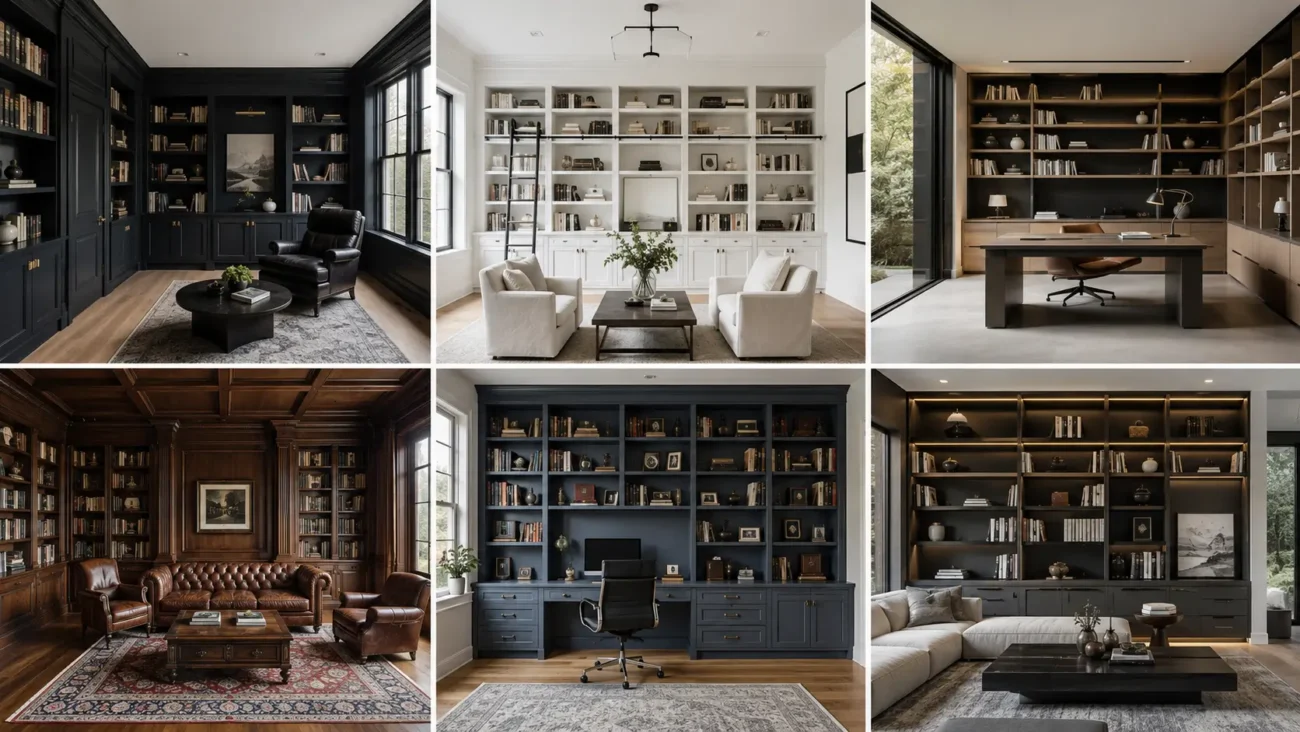
Home library design can feel personal and impressive without copying the familiar formula of dark bookcases, rolling ladders, and one reading chair beside a lamp. A more thoughtful room uses books to shape movement, introduce texture, improve comfort, and express the interests of the people living there. Open plan homes can benefit from library screens, while compact rooms may work better with archive drawers, raised platforms, or carefully integrated lighting.
Decorative ceilings, acoustic materials, botanical elements, and gallery style displays can also give the room a clear identity. The following ideas explore seven distinctive ways to create a functional library that feels collected, comfortable, and connected to the architecture of the home.
Double Sided Library Screens That Shape Open Rooms
A double sided library screen creates book storage while dividing an open room into more intimate zones. Unlike a solid wall, this structure can preserve light, movement, and visual connection between adjoining areas. Keep the shelves shallow enough to avoid a bulky appearance, then combine open sections with a few closed compartments.
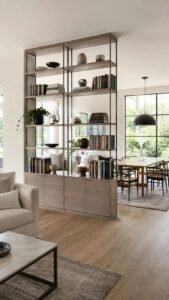
This design works well between a living area and dining space, inside a large bedroom, or along the edge of a wide entry hall.
Slatted Book Spine Divider
Build a narrow screen with evenly spaced vertical slats and small shelves fitted between them. The books remain visible from both sides, while the gaps allow daylight to travel through the structure.
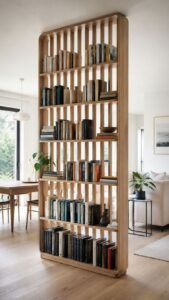
Use the lower shelves for heavier books and reserve the upper sections for lighter volumes. A softly rounded outer frame can prevent the divider from feeling rigid or commercial.
Pivoting Display Sections
Introduce two or three shelf sections that rotate gently within a fixed frame. One side can hold favorite books, while the reverse may display framed illustrations, ceramics, or a small collection of meaningful objects.
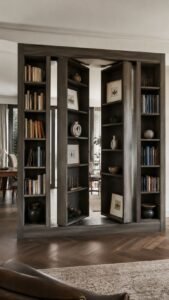
The moving sections allow the room to change according to the occasion. Keep the remaining shelves stationary so the feature feels practical instead of overly complicated.
Clear Backed Passage Screen
Use transparent or lightly fluted backing behind selected shelves to define the library without closing it off. Books placed against the translucent surface gain a subtle layered appearance, while light passing through keeps the room bright.
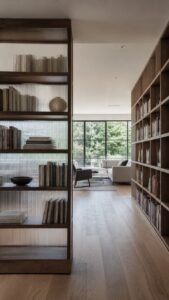
Leave a wide opening beside the screen to create a natural passage. The result feels architectural even when the library occupies only part of a larger room.
Ceiling Story Libraries That Draw the Eye Upward
A home library ceiling can contribute as much character as the shelving and furniture below it. Decorative treatment overhead creates a sense of enclosure and turns an ordinary room into a destination.
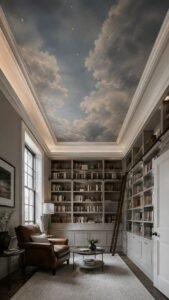
The design should connect with the subject of the collection without becoming theatrical. Select one clear ceiling feature, then keep the remaining surfaces calmer so the room remains comfortable for long reading sessions.
Plaster Constellation Ceiling
Apply small raised stars, circles, and connecting curves across a smooth ceiling to form an abstract constellation. Paint the details in the same shade as the background so the pattern becomes visible through shadow rather than strong contrast.
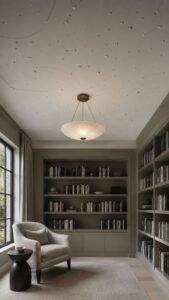
This approach adds interest without making the library feel themed. A central frosted pendant can complete the quiet celestial effect.
Framed Cartography Panels
Divide the ceiling into several broad sections and fill each one with a simplified map inspired pattern. Use faded blue, parchment, soft gray, and muted clay instead of bright colors.
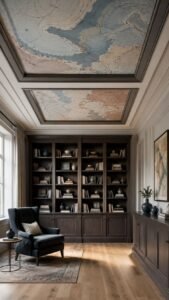
The lines do not need to represent a real location. Their purpose is to suggest exploration and discovery while adding structured detail above the book collection.
Soft Fabric Canopy Squares
Attach shallow padded squares across part of the ceiling using tightly stretched fabric. Choose a subtle woven material in warm stone, muted blue, or gentle cocoa.
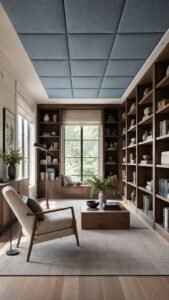
The fabric introduces softness and can help reduce the hard appearance of a room filled with straight shelving. Keep the pattern limited to the central area so the ceiling does not feel visually heavy.
Folio Archive Libraries for Oversized Collections
Not every collection fits comfortably on conventional shelves. Art books, maps, prints, magazines, manuscripts, and photography volumes often need wider or flatter storage. A folio archive library gives these pieces a proper place while introducing the atmosphere of a private study collection.
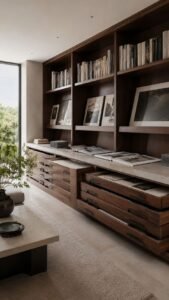
Combine low drawers with deep display bays, then leave enough open surface for viewing books without placing them on the floor.
Flat File Storage Wall
Install a wide bank of shallow drawers along one wall for prints, maps, and delicate paper pieces. Add small label holders to the drawer fronts so categories can be identified easily.
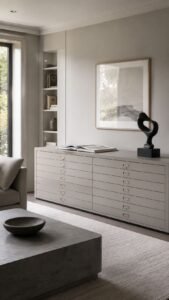
The upper surface can support an open book, a sculpture, or a rotating display. Keep the drawer color close to the wall shade for a calm, integrated appearance.
Deep Art Book Bays
Create a series of generous square openings sized for heavy art and photography books. Position the books flat or slightly angled so their weight remains supported.
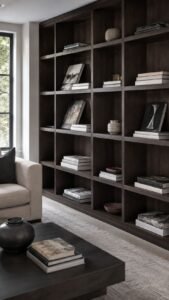
Alternate the filled bays with empty spaces containing one meaningful object. This arrangement gives oversized volumes room to breathe and prevents the shelves from appearing packed without purpose.
Pullout Catalog Station
Include a narrow pullout surface with space for a notebook, collection records, and book care supplies. Small interior compartments can hold labels, pencils, protective paper, and bookmarks.
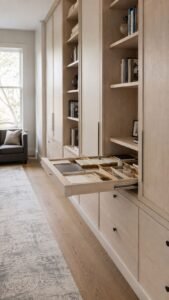
When closed, the station should disappear into the archive cabinetry. This practical addition makes it easier to organize a growing collection without introducing a permanent office area into the library.
Tiered Reading Platforms With Relaxed Gathering Space
A tiered platform creates casual seating and storage without depending on traditional armchairs or a standard sofa arrangement. The raised structure can transform one end of the room into a flexible place for reading, conversation, or quiet family time.
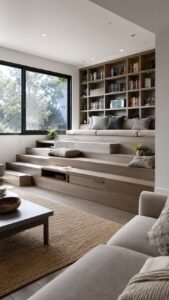
Keep the steps broad and low, with softened edges and comfortable surfaces. The platform should feel integrated with the floor rather than resembling temporary event seating.
Low Stepped Reading Deck
Construct two wide levels across the shorter wall of the room. Cover the upper surfaces with a durable woven material or fitted cushions in a calm solid color. Readers can sit upright, stretch out, or move between levels depending on their preferred position.
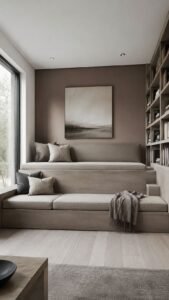
Keep the lowest step deep enough to serve as additional seating when several people use the library together.
Inset Book Channels
Create narrow recessed channels along the outer edge of each platform level. These openings can hold the books currently being read without mixing them into the main collection.
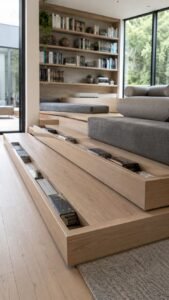
Add a smooth raised border to prevent books from sliding onto the floor. The channels introduce practical storage while preserving the clean outline of the tiered structure.
Removable Floor Cushion Collection
Place several structured floor cushions across the platform instead of covering it with permanent upholstery. Choose different shapes within one coordinated palette, such as wide squares, slim rectangles, and supportive round cushions.
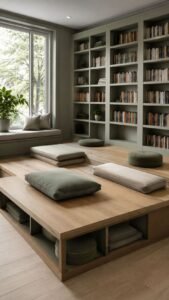
The pieces can be rearranged for individual reading or group conversation. Store unused cushions inside a concealed platform compartment to keep the room orderly.
Acoustic Cocoon Libraries for Quieter Reading
A quiet library depends on more than closing a door. Hard floors, bare walls, and large windows can cause sound to travel and echo, making concentration difficult. Acoustic materials can become visible design features rather than hidden technical additions.
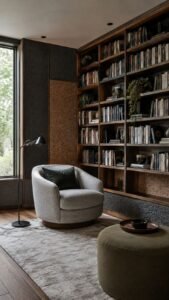
Cork, felt, textured wall coverings, and upholstered surfaces introduce warmth while helping the library feel separated from busier parts of the home.
Cork Lined Wall Planes
Cover one or two wall sections with fine grain cork in a natural light brown or softly stained tone. The material adds gentle texture and creates a useful surface for pinning reading lists, sketches, quotations, or collection notes.
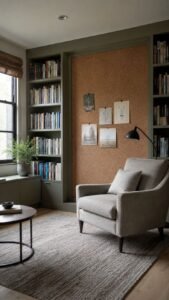
Frame the cork within clean wall borders so it appears intentional. Keep the display edited to prevent the area from becoming visually untidy.
Ribbed Felt Reading Niches
Create shallow wall recesses lined with vertical felt ribs. The grooves introduce depth while helping soften sound around a preferred reading position. Choose felt in muted mineral shades such as dusty blue, warm taupe, or softened rust.
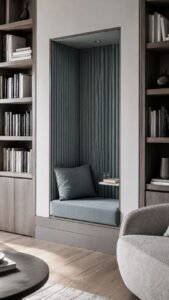
A narrow shelf within the recess can hold the current book and a glass of water without requiring a separate side table.
Quiet Threshold Details
Reduce sound entering the library by treating the room entrance as part of the design. Use a solid door with a fabric covered inner surface and a discreet seal around the frame. Continue the wall finish across the door so it blends into the room when closed.
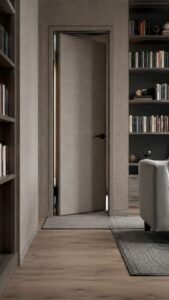
A soft floor transition beneath it can further reduce noise without adding a large decorative element.
Conservatory Libraries With Controlled Natural Elements
A conservatory inspired library combines books with daylight, botanical forms, and fresh natural color. However, the design must protect the collection from harsh sun and excessive moisture.
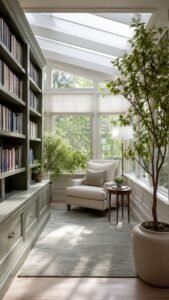
Plants should remain separated from the shelves, and filtered light should replace direct exposure. The result can feel open and restorative while still functioning as a responsible place for storing books and paper.
Filtered Glass Reading Zone
Position the reading area behind a translucent glass screen that softens strong daylight before it reaches the collection. The screen can feature a subtle ribbed, clouded, or seeded texture.
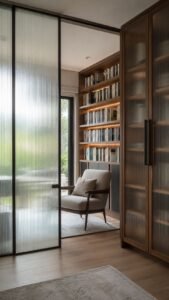
Books remain visible beyond it, but the filtered surface creates a calmer atmosphere. Repeat the glass on a cabinet front or interior door to connect the feature with the wider room.
Framed Herbarium Artwork
Display pressed botanical specimens inside sealed frames rather than placing loose dried plants among the books. Arrange the frames in a measured row with generous spacing around each piece.
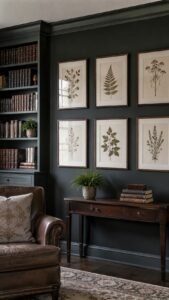
Choose specimens with varied shapes but similar neutral backgrounds. The botanical display introduces natural detail while keeping fragile leaves protected and the shelving free from loose material.
Separate Plant Plinths
Group a few indoor plants on stone or ceramic plinths positioned away from bookshelves. Vary the heights to create a small indoor landscape without overcrowding the room. Select plants with sculptural leaves rather than trailing growth that could reach the collection.
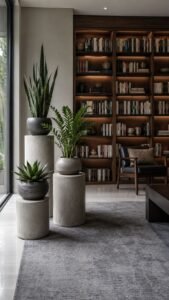
A washable surface beneath the plinths makes care easier and keeps water completely separate from books.
Luminous Gallery Libraries With Integrated Glow
Lighting can become part of the library architecture instead of appearing as an added fixture. Narrow illuminated channels, glowing bases, and translucent cabinet fronts create a soft atmosphere while helping readers navigate the collection.
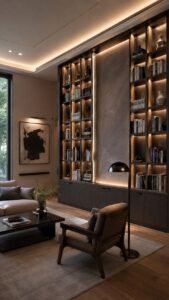
The light should remain warm and controlled, with no strong glare across book covers. Combine architectural glow with one focused reading source to maintain comfort and clarity.
Vertical Shelf Light Channels
Place slim recessed light channels between groups of shelves rather than beneath every horizontal surface. The vertical lines emphasize the height of the room and create a steady rhythm across the wall.
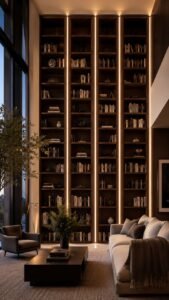
Keep the light warm and dimmable so it can shift from practical brightness to a softer evening setting. Dark gaps between the channels will preserve depth and prevent visual flatness.
Glowing Base Plinth
Lift the lowest row of cabinetry slightly above the floor and conceal lighting beneath its front edge. The soft glow makes the shelves appear lighter while improving visibility along the floor after dark.
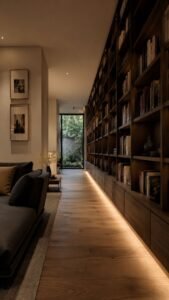
Keep the source hidden so only reflected light is visible. This detail works especially well in narrow libraries where bulky floor fixtures would interrupt movement.
Translucent Archive Fronts
Use lightly frosted cabinet fronts for rare books, delicate papers, or less frequently used materials. Add a subtle interior glow that reveals only the outlines of the stored pieces. The concealed collection becomes part of the room atmosphere without creating visual clutter.
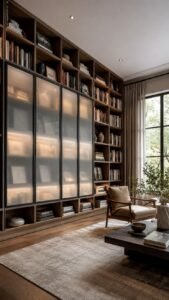
Clear labels on the cabinet edge can preserve organization while maintaining the calm, gallery inspired appearance.
Create a Home Library That Feels Collected, Not Copied
A memorable home library design should reflect the collection, architecture, and daily routines of the people using it. Double sided screens can shape open rooms, decorative ceilings can create identity, and archive drawers can protect unusual book formats. Tiered platforms introduce flexible comfort, acoustic materials support concentration, natural elements bring freshness, and integrated lighting gives the room an inviting glow. Choose one main direction instead of combining every feature at once, then repeat its materials and shapes with restraint. Continue exploring related reading room, bookshelf styling, small space interior, lighting, and home decor ideas to develop a library that feels thoughtful from every angle.
