
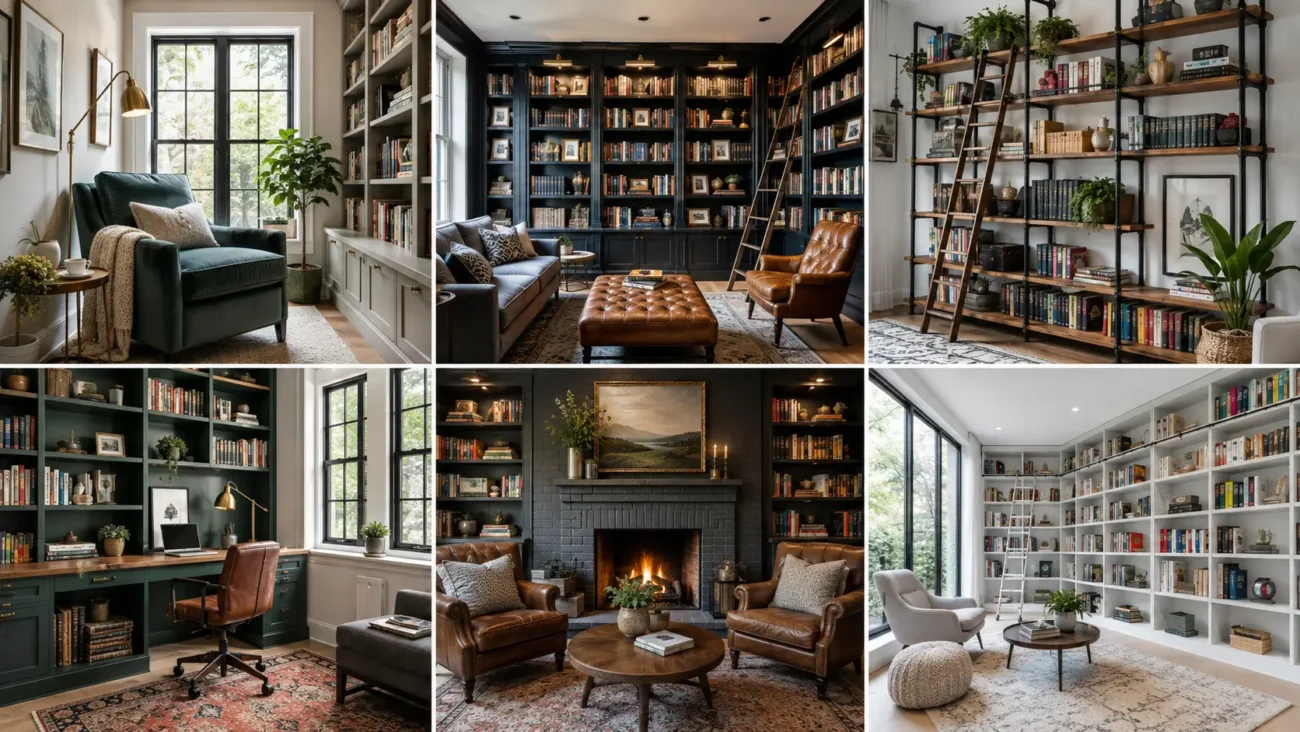
A home library should make books easier to enjoy while giving the room a clear identity. The strongest home library ideas do not depend on ordinary shelves, a single reading chair, or decorative objects placed wherever space remains. They use overlooked architectural areas, adaptable work surfaces, thoughtful display methods, and storage designed for different kinds of reading material.
The six concepts below explore a book portal entry, a hidden scholar carrel, exhibition cradles, an archive drawer plinth, a column wrapped collection, and a conservation console. Each idea can suit a dedicated library, home office, hallway, landing, or living space while keeping the finished room personal, practical, and visually distinctive.
Book Portal Entry That Makes the Collection Part of the Arrival
A book portal surrounds an existing doorway with shelving so entering the library feels like passing through the collection itself.
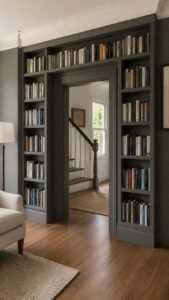
Keep the shelves shallow enough for comfortable movement and use one consistent finish so the structure feels architectural rather than added as separate bookcases.
Bridge the Doorway With a Transom Shelf
Continue the shelving above the doorway with one strong horizontal book section. Reserve this upper bridge for matching editions, oversized volumes, or books that are not used every day.
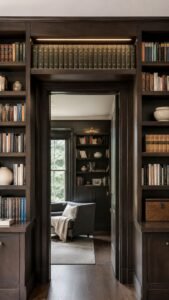
A narrow timber lip can protect the outer row, while a slim recessed light above the frame makes the books visible without directing glare into the reader’s eyes.
Turn the Inner Jambs Into Display Niches
Use the inside edges of the portal for narrow niches that hold one book face forward, a small sculpture, or a personal keepsake. Paint these recesses in a deeper tone than the outer shelves so they appear carved into the doorway.

Limiting each niche to one object prevents the passage from feeling crowded and gives special pieces a deliberate place.
Color the Passage Reveal as a Quiet Surprise
Paint the inner reveal of the doorway in aubergine, forest green, tobacco, or mineral blue while keeping the surrounding shelves in warm wood or cream. The color becomes visible only as someone approaches or walks through the opening.
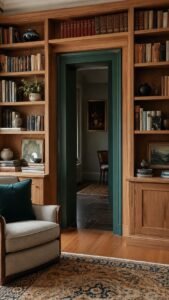
Repeating the shade on one chair cushion or bookend connects the surprise detail with the rest of the library.
Pullout Scholar Carrel Hidden Inside the Book Wall
A pullout scholar carrel places a compact writing and research surface inside the shelving instead of adding a permanent desk to the room. When closed, the front aligns with the surrounding bookcase.

When opened, it provides enough space for notes, a laptop, or several reference books. This idea suits libraries that need occasional study space without sacrificing an open floor or calm furniture arrangement.
Slide Out a Felt Lined Writing Surface
Install a strong pullout slab at seated height and cover the working section with wool felt, leather, or another quiet writing material. The softer surface protects books and reduces noise when objects are moved.

A shallow raised edge at the back can stop pencils from rolling while allowing the platform to disappear fully into the shelving after use.
Open Two Narrow Reference Wings
Fit slim hinged wings inside the carrel so they open beside the writing surface and hold current reference books upright. Each wing can include one shallow shelf and a small clip for notes.
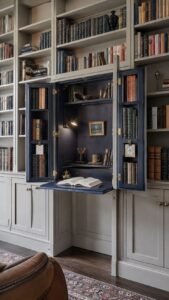
Closing the wings protects unfinished work and keeps the room visually settled. Their inner color can be stronger than the outer cabinet for a focused study atmosphere.
Conceal Power Inside a Vertical Service Slot
Create a narrow service slot beside the carrel for charging cables, a reading lamp connection, and a small device shelf. A removable panel makes maintenance easier.
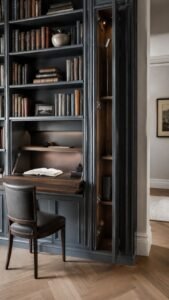
Hiding this practical equipment inside the book wall keeps the main work surface clear and prevents cords from crossing the floor.
Book Cradle Exhibition Wall for Current Reading
A book cradle wall gives current reads, art books, and meaningful editions a place to be seen without turning every shelf into a decorative display. Angled supports hold selected books open or face forward while the larger collection remains stored conventionally elsewhere.

The arrangement can change monthly, making the library feel active and personal rather than fixed after the first styling session.
Angle Three Cradles at Different Heights
Mount three shallow cradles across one section of wall, changing their height and horizontal position rather than forming a perfect row. Use them for illustrated pages, poetry collections, or books connected to the same subject.

A low retaining edge keeps each volume secure, while generous wall space around the group allows the displayed pages to remain the clear focus.
Add a Rotating Cover Rail Below
Install one slim rail beneath the cradles for books displayed with their covers facing outward. Small adjustable stops can hold different widths without damaging the edges. Rotate these books according to the season, a current project, or family interests.

The changing covers bring color into the room without relying on generic prints or unrelated wall decorations.
Create a Small Reading Note Strip
Place a narrow writing strip beside the exhibition wall for short observations, memorable lines, or the date a book was finished. Use replaceable cards inside a timber holder rather than writing directly on the wall.

This personal layer gives the display meaning and records how the collection is being used, while keeping private notes easy to remove or update.
Archive Drawer Plinth Beneath the Main Shelves
An archive drawer plinth creates a substantial base below the bookcases and stores material that does not sit comfortably on ordinary shelves. Maps, prints, magazines, photographs, notebooks, and delicate paper collections can remain flat and protected.

The deep lower band also gives tall shelving a grounded furniture quality, especially when the drawer fronts use a contrasting timber or painted finish.
Reserve One Wide Drawer for Maps and Prints
Build one broad shallow drawer with a smooth interior and enough support to prevent sagging. Use acid free folders for valuable paper and add simple dividers so prints do not slide when the drawer opens.
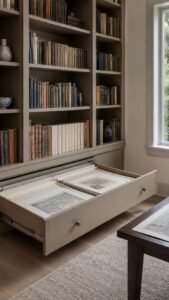
Position this drawer near a large table or clear floor area where the contents can be viewed comfortably without carrying them across the entire room.
Divide a Drawer for Journals and Ephemera
Use adjustable compartments for notebooks, letters, event programs, bookmarks, and small paper collections. Lined sections keep delicate items separated and make categories easier to maintain.
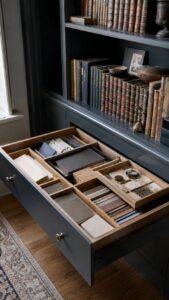
A removable tray can hold the pieces currently being studied. This prevents personal archives from disappearing into boxes while keeping visually busy material behind a calm cabinet front.
Give Every Front an Index Pull
Fit each drawer with a broad index pull that combines a comfortable handle and a replaceable label window. Use simple category names rather than listing every object inside.
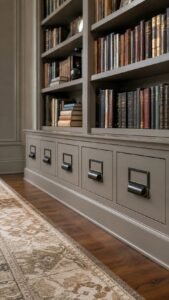
Aged brass, dark bronze, or painted timber can give the plinth an archival character. Keeping the labels consistent makes a large collection easier to navigate without covering the shelves with signs.
Column Wrapped Library That Uses a Difficult Structural Feature
A structural column can become part of the collection instead of remaining an awkward object in the middle of the room. Shallow shelving can wrap around two, three, or four sides, depending on the circulation path.

The result works as a book landmark, a subject based collection point, or a divider between reading activities while preserving clear movement around the column.
Assign One Subject to Each Visible Face
Organize each side around a different subject, such as travel, art, nature, or history, and use one small marker near the top for orientation. This makes the column useful from several directions and prevents readers from circling it unnecessarily.
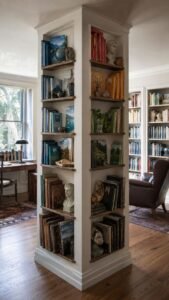
Keep the shelves shallow and place heavier books lower so the wrapped structure remains balanced and secure.
Soften the Corners With Curved Book Guards
Add rounded timber guards where the shelf edges meet the corners of the column. These pieces protect book spines, reduce sharp projections, and create a crafted transition between each face.

Their shape also helps people move safely around the structure.
Crown the Column With a Circular Light
Place a ring shaped or faceted light above the wrapped shelves so illumination falls evenly around the column.

This overhead marker turns the column into a visual center while supporting browsing from every side.
Book Conservation Console With a Working Display Surface
A conservation console creates a dedicated place for covering, repairing, labeling, and caring for books.

A long shallow form works against an open wall and can also support newly acquired books before they join the collection.
Cover the Top With Smooth Linoleum
Use furniture linoleum or another resilient matte material across the working top. It provides a quiet surface for folding protective covers, cleaning book jackets, and arranging paper without the glare of polished stone.

A contrasting timber edge gives the console a finished appearance. Keep the center open so larger volumes can lie flat without touching decorative objects.
Store Tools in a Vertical Shadow Rack
Mount a shallow rack above the console for brushes, bone folders, measuring tools, and rolls of archival tape.
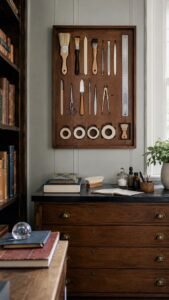
Give every tool its own outline or fitted slot so missing items are easy to notice. The organized display adds studio character.
Add a Quarantine Shelf for New Books
Reserve one ventilated shelf below the console for secondhand or newly purchased books that need inspection, cleaning, or minor repair before entering the main shelves. Use removable trays and leave space between groups.

This practical pause protects the larger collection and gives incoming books a clear process, while the shelf remains discreet behind a perforated or slatted front.
Let Your Home Library Reflect How You Read and Collect
Original home library ideas become meaningful when they support the habits behind the collection. A book portal makes arrival part of the experience, while a hidden scholar carrel provides focused work without a permanent desk. Exhibition cradles keep current reading visible, and an archive drawer plinth protects paper collections. A wrapped column turns difficult architecture into useful shelving, while a conservation console creates a place to care for books properly. Choose the concepts that match your space and collection, then connect them through repeated wood, color, hardware, or lighting. You can also explore related articles about reading room colors, bookshelf organization, home office design, small library layouts, reading chairs, book storage, wall lighting, and study room decor.
