
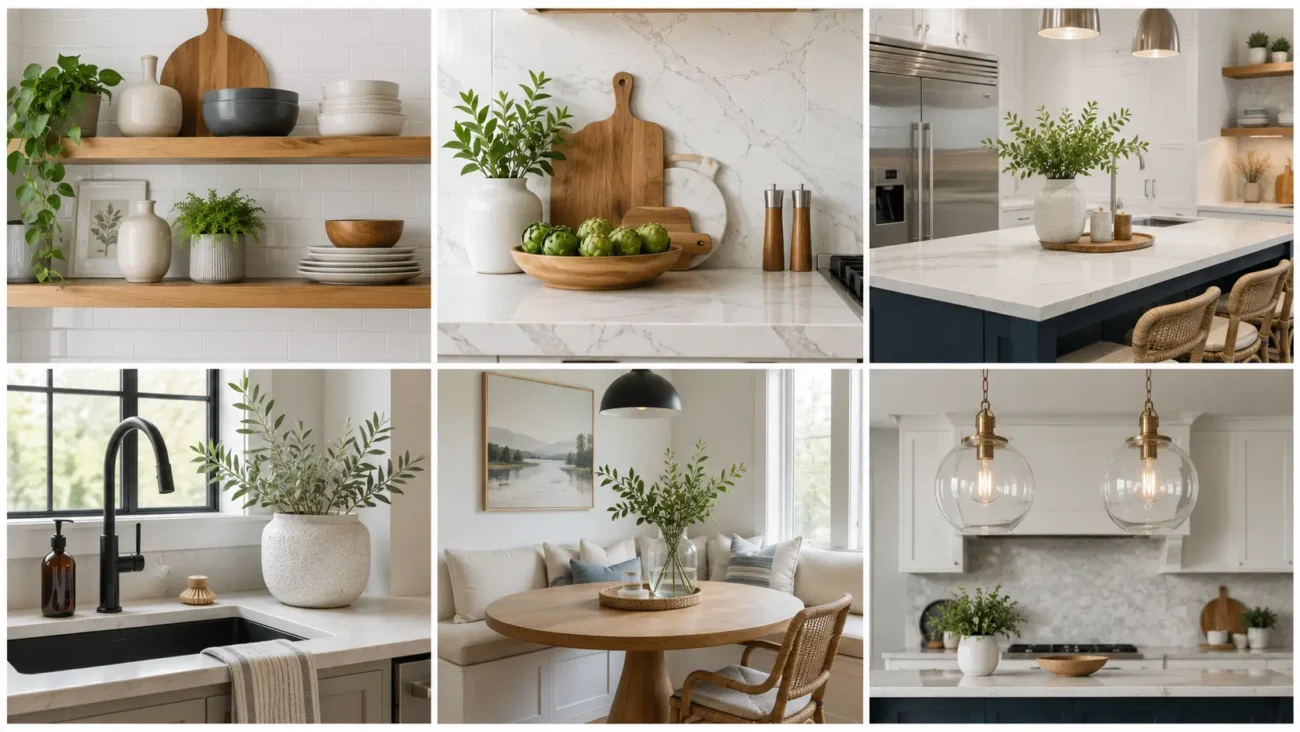
Kitchen decor feels more original when it grows from the architecture instead of collecting on counters. Exposed cabinet ends, island backs, window recesses, floor edges, toe kicks, and refrigerator sides can all carry color, texture, or display without reducing preparation space. The six ideas below turn these areas into purposeful features.
Warm timber, earthy paint, tactile ceramic, and muted metal keep the room welcoming while personal objects stand out. Each idea includes three approaches for refreshing compact kitchens, open plan spaces, rentals, or full renovations without repeating the same formula.
Island Back Relief Panels With Furniture Like Detail
The back of an island often faces a dining or living area but remains blank. Relief panels can make this broad section feel like crafted furniture.
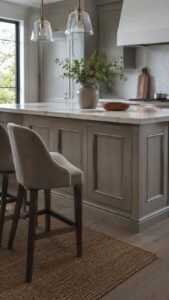
Use shallow shapes, durable finishes, and a limited palette so chairs move comfortably beside it. Timber, painted plaster, sealed cork, and ceramic inserts can add depth without filling the room with loose accessories.
Carve Wide Timber Arches Across the Base
Cover the island back with broad timber panels and shape one shallow arch inside each section. Keep the grain visible and repeat the curve at a calm rhythm. A darker stain inside the recesses creates depth, while a lighter outer frame prevents heaviness.
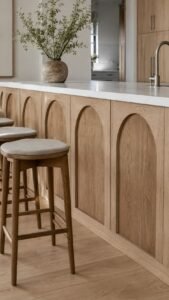
The arches can align with stools or continue across the full back for a stronger architectural look.
Insert One Glazed Ceramic Color Pocket
Reserve a small rectangular section near one end for handmade ceramic pieces in olive, oxblood, mineral blue, or warm cream. Set the tiles flush with the surrounding panel so clothing and chairs do not catch.
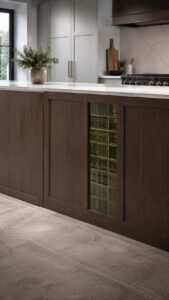
One concentrated color pocket creates a focal point without turning the island into a busy mosaic. Repeat the glaze in one bowl or lamp elsewhere.
Wrap the Corner With Soft Vertical Ribs
Add shallow vertical ribs around one island corner and continue them a short distance along both sides. Rounded edges soften the transition and make the island feel finished from different viewpoints.
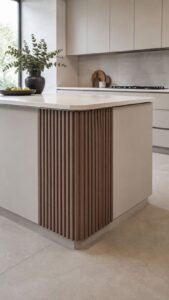
Paint the ribs in a clay or cocoa tone, then keep the remaining panels smooth. The contrast between textured and flat areas gives the base a tailored appearance.
Cabinet End Galleries With Changeable Personal Displays
An exposed cabinet end can become a compact gallery. A framed panel, recessed slot, or narrow display strip can hold artwork, recipes, textiles, or small objects that change over time.
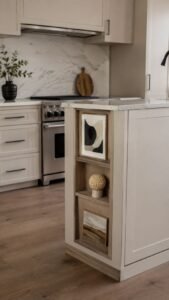
Keep the projection shallow so it does not interfere with movement. Matching the frame to the cabinetry will make the gallery feel integrated, while the interior can introduce stronger color.
Frame One Oversized Print Behind Clear Acrylic
Create a slim frame on the cabinet end and protect one large print behind clear acrylic. Choose abstract artwork, a botanical study, or a personal photograph with colors already present in the kitchen.
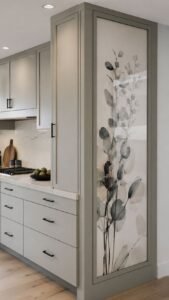
A single generous image will look calmer than several tiny frames. Use hidden fasteners so the artwork can be replaced when the room palette or season changes.
Build a Narrow Slot for Recipe Cards
Add three shallow horizontal slots for handwritten recipes, postcards, menus, or small art cards. Vary the visible height of each piece so the arrangement feels collected rather than perfectly stacked.
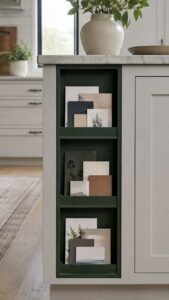
Paint the recessed interior in saffron, plum, or deep green. The cards can rotate regularly while the cabinet surface remains organized.
Stretch a Textile Panel Inside a Timber Border
Fit a washable textile inside a narrow timber frame and secure it from the back for easy removal. A woven stripe, block printed cloth, or embroidered remnant can soften stone and painted cabinets without becoming a curtain.
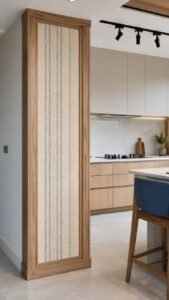
Keep the fabric away from the main cooking and sink areas. Repeat one thread color in nearby seating to connect the panel to the kitchen.
Window Reveal Decor With Color, Glass, and Small Collections
A kitchen window recess can become a focused decorative zone while preserving natural light. Treat the top, sides, and sill as one framed composition.
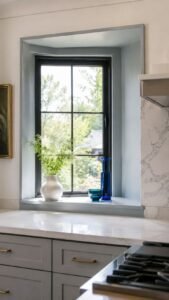
Paint can deepen the reveal, slim glass shelves can hold a few objects, and a compact light can make the feature visible after dark. Keep the arrangement edited so cleaning and window access remain simple.
Paint the Inner Recess a Saturated Shade
Choose a color deeper than the surrounding walls and apply it only inside the window recess. Muddy blue, aubergine, moss, or burnt orange can frame the view like artwork.
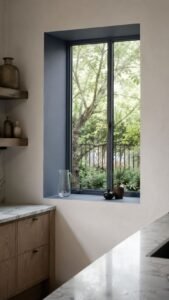
Continue the color across the sill, then keep the trim quiet. The concentrated placement introduces confidence without committing every cabinet or wall to a strong shade.
Suspend One Clear Shelf Across the Opening
Install a narrow clear glass shelf within the reveal and place it above the main sightline. Display two or three lightweight pieces such as colored glass, a small ceramic form, or a trailing cutting in water.
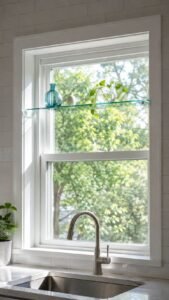
Leave generous gaps so daylight passes through. Transparent supports keep the shelf visually light while the objects cast changing shadows.
Add a Small Side Light for Evening Glow
Mount a compact shaded light on one side of the recess and direct it toward the opposite wall. The reflected glow will emphasize the paint color and displayed objects after sunset.
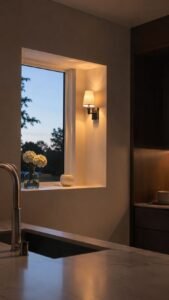
Choose a simple fixture with a warm bulb. Keeping it inside the reveal adds another lighting layer without occupying the counter.
Floor Border Decor That Gives the Kitchen a Clear Frame
A decorative floor border can define the kitchen without a rug or full flooring change. Painted lines, inset tiles, or contrasting timber can follow the cabinetry, island, or room perimeter.
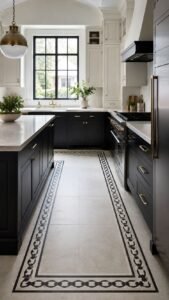
The border should support movement rather than create visual obstacles. Choose a durable finish and keep the pattern broad enough to read from standing height.
Outline the Cabinet Run With Dark Timber
Install or stain a narrow timber strip along the floor in front of the main cabinet run. A darker tone can frame pale flooring and create a deliberate path through the work zone.
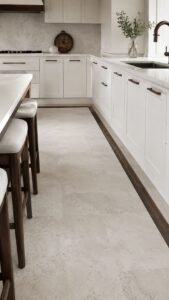
Keep the strip straight through long sections and turn it cleanly at corners. Repeat the timber on handles or stools so the detail feels connected.
Mark the Island Footprint With Clay Tile
Place a border of clay colored tile around the island footprint while leaving the interior floor unchanged. Use large simple pieces rather than a detailed pattern so the outline feels architectural.
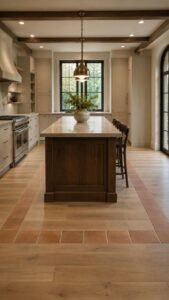
The warm edge can echo terracotta cookware, wood cabinetry, or rust upholstery. Leave enough clear floor around it for comfortable movement.
Create a Painted Threshold Between Rooms
Use suitable floor paint to create one wide color band where the kitchen meets a dining or living area. Olive, navy, brick, or charcoal can form a strong transition without a physical divider.
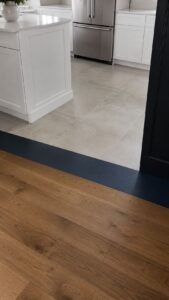
Keep the band free from lettering or complex motifs. Its width should relate to the opening so it looks intentional from both sides.
Toe Kick Inlays With Hidden Color and Low Detail
Toe kicks can add a refined layer of color and material. A contrasting band, inset tile, or subtle low light can make base cabinets appear more considered without changing the doors.
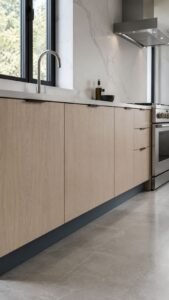
Because this area receives regular contact and cleaning, use durable surfaces and simple details. The strongest result remains quiet from across the room and becomes noticeable closer up.
Run a Deep Color Band Beneath Pale Cabinets
Paint the full toe kick in black cherry, forest green, ink blue, or dark cocoa. The darker line will make pale cabinets appear slightly lifted and give the room a crisp foundation.
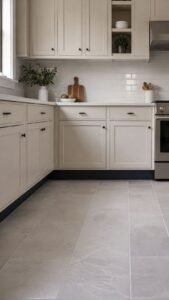
Keep the band continuous through corners and beneath appliances where possible. A satin finish will hide small marks better than a highly reflective surface.
Set Small Stone Squares at Key Points
Insert a few durable stone or ceramic squares beneath important cabinet sections rather than covering the entire toe kick. Place them below the sink, range, or island corners to create a quiet rhythm.
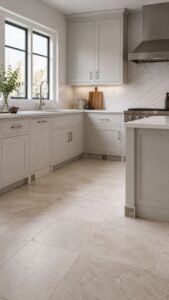
Choose pieces with subtle variation and surround them with a plain painted background. Limited placement keeps each insert intentional.
Conceal a Warm Light Behind a Recessed Edge
Fit a warm low level light inside the recessed toe kick and hide the source behind the upper edge. The glow should wash gently across the floor instead of appearing as a bright visible strip.
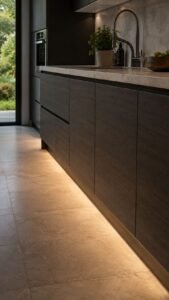
Use it for evening navigation or softer entertaining light. With dark cabinetry, the illumination can make the base feel lighter.
Refrigerator Side Niches With Useful Decorative Purpose
The exposed side of a refrigerator or tall cabinet can become a purposeful decor surface. A shallow niche, framed board, or narrow rail can support everyday objects without blocking doors or circulation. Keep every addition within the cabinet depth and away from ventilation.
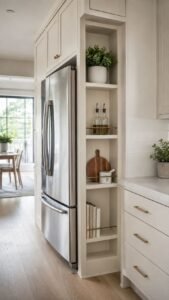
Using the same material as nearby cabinetry will make the feature feel planned.
Recess a Tall Cork Panel for Notes
Create a narrow cork panel inside a timber or painted frame for shopping lists, invitations, photographs, and seasonal cards. Limit the visible items to a small rotating group so the surface stays calm.
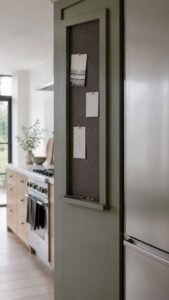
Dark cork or fabric covered cork can feel more decorative than a standard office board. A slim lower ledge can hold pins or a pencil.
Add a Rail for Small Framed Objects
Install one vertical rail with adjustable clips or miniature ledges for small framed prints, recipe illustrations, or ceramic plaques. Changing the heights creates movement without filling the full appliance side.
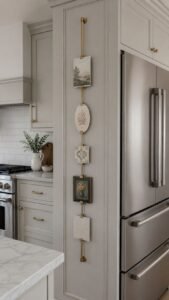
Keep the objects flat and lightweight. Matching the rail finish to cabinet hardware will connect this gallery with the rest of the kitchen.
Build a Shallow Tray for Daily Essentials
Attach a slim enclosed tray near waist height for keys, sunglasses, reusable bags, or mail entering the kitchen. Add one divider and a rounded front so the contents stay contained.

The tray should project only slightly and remain clear of the refrigerator handle. Paint its interior in a warm accent color for a decorative finish.
Let Kitchen Decor Grow From the Surfaces Already There
Kitchen decor feels more personal when it strengthens the room instead of adding clutter to every worktop. Island relief panels can make cabinetry feel like furniture, while cabinet end galleries create space for changing art. Window reveals frame color and glass, and floor borders define the kitchen through material. Toe kick inlays introduce quiet detail near the ground, while refrigerator side niches turn an ignored surface into useful display. Choose concepts that suit the layout, then connect them through repeated timber, paint, ceramic, or metal. You can also explore related articles about kitchen colors, cabinet styling, backsplash ideas, small kitchen decor, countertop organization, kitchen lighting, dining spaces, and storage solutions.
