
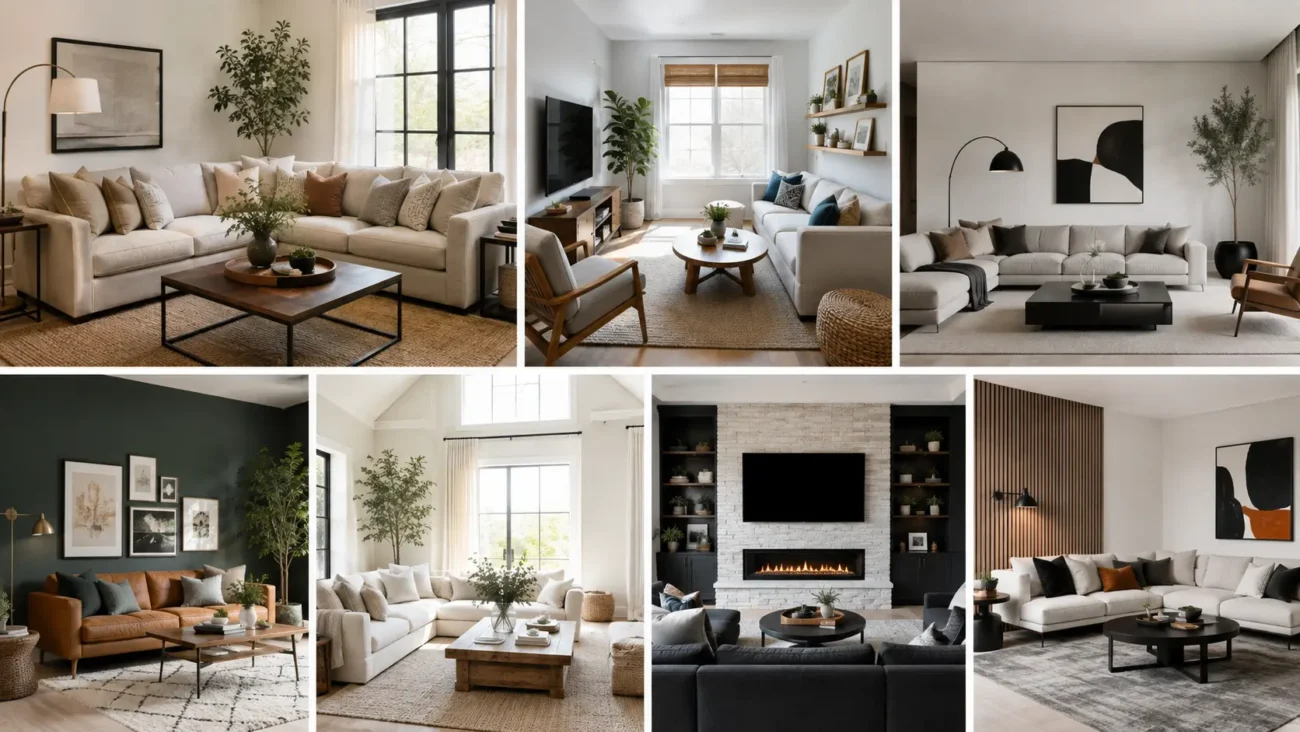
The best living room ideas make the space comfortable, personal, and useful. It should support conversation, quiet evenings, entertaining, storage, and everyday routines. Instead of relying on matching furniture or familiar wall arrangements, the concepts below use raised floor zones, listening furniture, planted centerpieces, expressive upholstery, mobile hosting, and grouped tables. Each idea includes three practical directions for apartments, family homes, or open layouts. Repeating one color, wood tone, or material will help the unusual elements feel connected rather than random.
Raised Sofa Platform With a Calm Framed Lounge Zone
A low platform beneath the main sofa can define the lounge without building a wall or adding another rug. The slight change in level gives the seating area architectural importance and helps an open room feel organized.
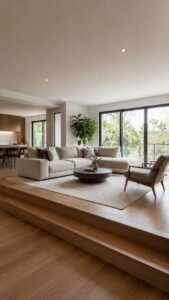
Use finished plywood, warm timber, or painted panels, then keep the platform shallow enough for comfortable movement.
Extend the Platform Beyond the Sofa Arms
Build the base wider than the sofa so a visible border remains on both sides. The extra surface can hold a floor cushion, a substantial planter, or a small reading stack without adding furniture.
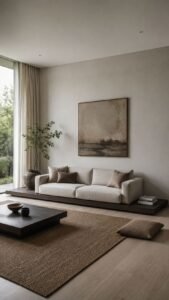
Finish every exposed edge carefully. A platform matching the floor feels subtle, while a darker finish creates a stronger boundary.
Set a Recessed Rug Inside the Surface
Plan a shallow inset where a flat woven rug can sit level with the platform. This keeps the textile from sliding and creates a tailored frame around the seating. Choose a restrained pattern that will not compete with upholstery.
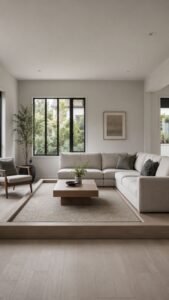
Leave enough timber or painted surface visible around it to preserve the raised effect.
Conceal Cables Along the Rear Channel
Add a narrow covered channel behind the sofa for lamp cords, charging cables, and speaker wires. Small access openings can sit near the sofa arms, allowing devices to connect without cords crossing the walkway.
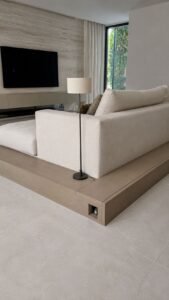
Finish the removable cover to match the platform. This keeps technology available without weakening the clean appearance.
Listening Cabinet Wall With Music Built Into the Decor
A listening cabinet gives music a visible role without allowing speakers, wires, and equipment to dominate the room. Choose one substantial cabinet, then organize records, books, and audio pieces inside it.

Warm wood, lacquered color, or woven door inserts can connect the unit to existing furniture. It creates a destination for slow evenings while giving the room a personal subject beyond the television.
Reveal the Turntable With a Sliding Front
Fit one section with a panel that slides sideways to expose the turntable only during use. The moving front can carry bold color, carved detail, or simple timber grain.

When closed, it protects the equipment and restores a calm furniture surface. Keep enough open space above the player for comfortable handling and ventilation.
Display One Album in a Deep Picture Slot
Create a shallow recessed slot at eye level where one record cover can be displayed like artwork. Change it with the music so the wall gains a fresh graphic accent.
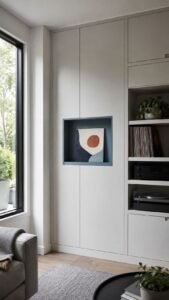
A small lip will hold the cover securely, while a painted interior can frame it. Keep surrounding doors simple so the image receives attention.
Place Speakers Behind Woven Door Panels
Use tightly woven cane, fabric covered mesh, or perforated timber in front of the speaker compartments. Sound can pass through while the equipment remains visually quiet.
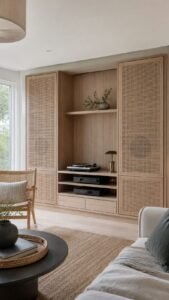
Match the panel material to a chair, basket, or tray elsewhere in the room. Removable backs and cable openings will make the system easier to adjust.
Indoor Garden Table That Acts Like Living Sculpture
An indoor garden table brings greenery into the center instead of pushing every plant toward the windows. A broad low table can hold a controlled arrangement of foliage, stone, and handmade vessels while leaving room for books or drinks.

Choose plants with different leaf shapes but similar care needs. The result should feel like one living composition rather than scattered pots.
Gather Plants Inside One Oversized Basin
Place several nursery pots inside a wide waterproof basin, then cover the gaps with smooth stones, bark, or preserved moss. This creates one planted landscape while keeping every plant removable.
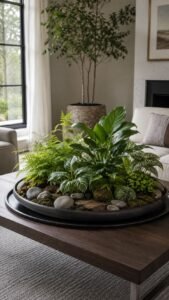
Choose a basin with a low rim so leaves remain the focus. Protect the table beneath it with a fitted tray and check drainage before watering.
Build Height With a Single Branching Plant
Use one taller plant with an open branching form as the main vertical element, then surround it with two lower varieties. The space between branches will keep daylight moving through the arrangement and prevent the table from feeling heavy.

Turn the taller plant regularly so it grows evenly, and use a quiet pot that lets the silhouette lead.
Reserve a Clear Serving Edge
Keep one third of the tabletop free for a tray, cup, or book. A narrow timber or stone strip can mark this practical zone and prevent the planting from spreading across the surface.

The clear edge keeps the table useful during gatherings and easy to maintain. Repeat the table material nearby to strengthen the connection.
Storytelling Upholstery With Different Fabrics Across the Room
Expressive upholstery can connect mismatched furniture without making every piece look like a set. Select one main sofa in a durable solid fabric, then introduce pattern, texture, and contrast through a chair, ottoman, or removable seat cushion.
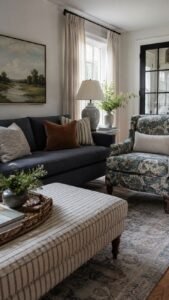
The fabrics should share one color or undertone even when their scale and material differ. This approach gives the room a collected character and helps older furniture sit confidently beside newer pieces.
Give the Armchair a Large Graphic Fabric
Use the strongest pattern on one chair rather than across the sofa. Broad checks, abstract curves, or oversized botanical shapes can create a focal point when surrounding pieces remain quieter.
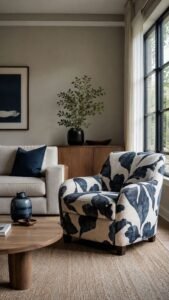
Pull one shade from the chair into a cushion or ceramic object nearby. Keeping the chair shape simple will help the pattern look confident rather than busy.
Add Contrast Welting to the Sofa
Replace or cover the sofa piping with a contrasting fabric that outlines the arms, back, and seat cushions. Deep brown on oat fabric, plum on dusty rose, or navy on soft green can sharpen a familiar sofa.
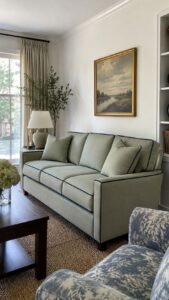
Keep the contrast consistent around every edge. This gives the largest furniture piece a custom appearance without adding objects.
Rework the Ottoman as a Fabric Bridge
Cover the ottoman in a material that includes colors from both the sofa and accent chair. A woven stripe, small geometric repeat, or textured multicolor cloth can connect pieces that would otherwise feel unrelated.
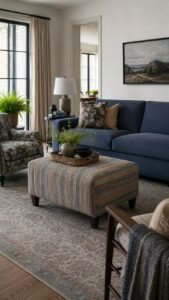
Choose a pattern that tolerates regular use and place the most durable section on top. The ottoman becomes the visual link at the center.
Mobile Hosting Cart That Changes With the Occasion
A well designed cart can support drinks, games, flowers, or creative supplies without controlling the room. Choose a model with quiet wheels, raised edges, and enough visual weight to feel like furniture.
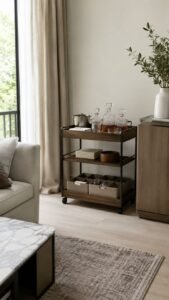
Store it beside a cabinet or in an unused corner, then move it close to the seating when needed. Consistent trays and containers will keep it attractive between gatherings.
Fit the Top With Two Removable Trays
Use two fitted trays instead of one uninterrupted surface. One can carry glasses or tea, while the other holds napkins, small plates, or serving tools. When extra space is needed, lift a tray and place it on an ottoman or side table.
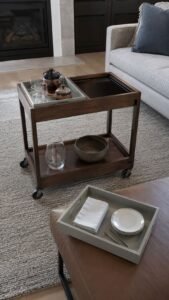
Choose washable materials and raised rims so the cart remains practical as well as decorative.
Turn the Lower Shelf Into a Game Library
Arrange board games, cards, and puzzle boxes vertically between simple dividers on the lower shelf. Uniform fabric sleeves or plain labels can calm colorful packaging without hiding what is available.
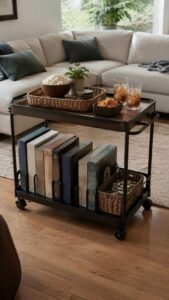
Leave one section open for a basket of loose pieces. Visible games encourage relaxed social time and give guests an easy activity.
Add a Flower Vessel Socket
Create a stable circular holder in one corner of the cart for a tall vase or leafy branch. The holder prevents the vessel from shifting while the cart moves and leaves the rest of the surface available.
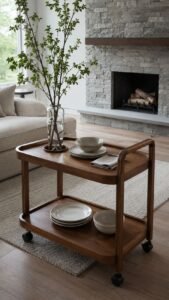
A removable insert can fit different vase sizes. Fresh or dried stems give the cart height even when it is not serving food.
Table Archipelago With Several Surfaces Instead of One Centerpiece
A table archipelago replaces one large coffee table with several smaller surfaces placed like connected islands. The arrangement can move when more floor space is needed and gives every seat a place for a drink or book.
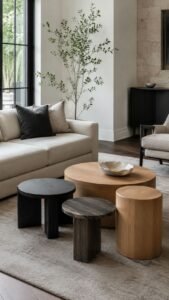
Choose tables with different shapes and heights, but connect them through one repeated material or color. The gaps become part of the design and make the center feel lighter.
Combine a Round Table With Two Narrow Forms
Begin with one medium round table, then add two slimmer pieces that tuck partly beside it. A narrow oval and a small square can create contrast without appearing chaotic.
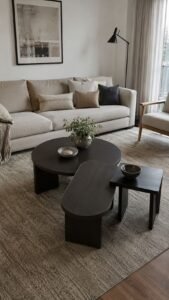
Keep their tops within a close height range so objects can move easily between them. Position the broadest surface nearest the sofa and the smallest near a chair.
Repeat One Material in Different Finishes
Connect the group by using the same material in changing finishes, such as pale and dark timber, honed and polished stone, or clear and colored glass. Repetition creates unity while variation gives depth.
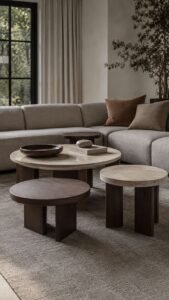
Avoid using more than three finishes. A repeated leg color can provide another link when the tops are expressive.
Leave a Deliberate Path Through the Middle
Arrange the tables with one visible channel that allows a person to reach the sofa without circling the entire group. The open path prevents the center from looking crowded.
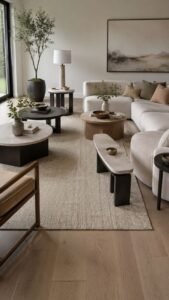
Angle one narrow table beside the channel to emphasize its direction. During gatherings, the smallest table can move beside another seat while the path widens.
Let Living Room Ideas Grow From Real Daily Habits
The most useful living room ideas begin with how people relax, listen, gather, and move through the space. A raised sofa platform can define an open layout, while a listening cabinet makes music part of the room identity. An indoor garden table introduces living sculpture, and varied upholstery gives mismatched furniture a shared story. A mobile hosting cart supports changing occasions, while a table archipelago creates flexible surfaces without one heavy centerpiece. Choose the ideas that solve real needs, then connect them through repeated color, timber, fabric, or shape. Related articles about small living rooms, furniture placement, wall color, window styling, storage, indoor plants, and lighting can help complete the plan.
