
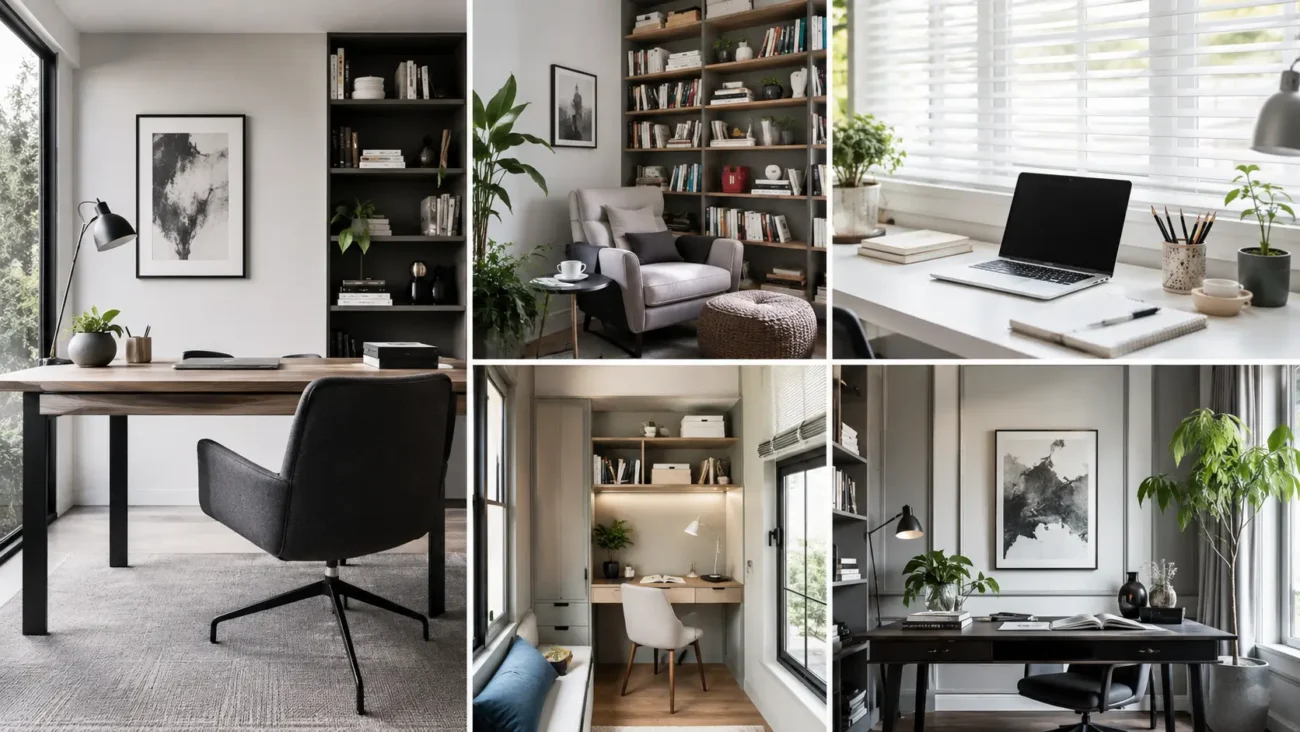
A study room should make concentration easier from the moment you sit down. The most effective spaces balance comfortable furniture, controlled light, quiet surfaces, practical storage, and enough personality to keep the room inspiring. Deep ink blue, warm ochre, parchment, muted green, walnut, and soft gray can create a focused atmosphere without making the space feel formal.
The six ideas below explore visible knowledge systems, acoustic texture, flexible work heights, filtered daylight, hidden technology, and a central research table. Each direction can be adapted for schoolwork, reading, creative projects, remote work, or shared family study.
Index Cabinet Study Room With an Organized Knowledge Wall
An index cabinet study room turns notes, supplies, and active projects into a visual system. Small drawers, labelled sections, and movable cards create order without hiding everything behind plain doors.

Walnut, parchment, dark green, and black ink give the room a scholarly character while keeping the arrangement practical for everyday use.
Convert Small Drawers Into Subject Stations
Use a shallow drawer cabinet for flash cards, pens, chargers, clips, and project materials, assigning one drawer to each subject or task. Add paper labels in the same lettering style so the cabinet remains calm.
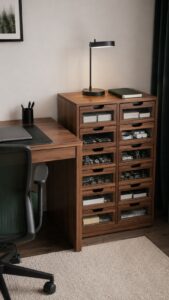
Place it beside the desk where supplies can be reached without standing, then reserve the top for one lamp and one notebook.
Build a Rotating Card Rail Above the Desk
Install a narrow rail with clips for formulas, vocabulary cards, deadlines, sketches, and reference images. Display only the material connected to the current week, then store older cards inside the cabinet.

This rotating approach keeps the wall useful instead of permanently crowded. A dark rail against a pale wall will frame the information clearly without requiring a large notice board.
Create a Daily Question Tray
Place a shallow tray near the front of the desk for one question, problem, or reading goal that should be completed that day. Add a small card holder and a box for finished prompts.
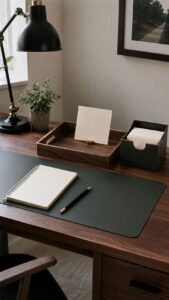
The simple ritual gives the room a clear starting point and prevents long task lists from dominating the whole workspace.
Acoustic Felt Study Room With Quiet Sculptural Texture
An acoustic felt study room uses soft surfaces to reduce the hard, echoing feeling created by bare walls, glass, and smooth furniture.
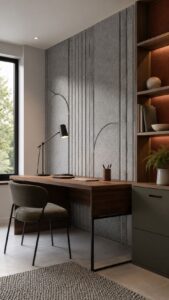
Felt can introduce pattern and color without filling shelves with decoration. Slate, moss, rust, and oatmeal work beautifully with wood desks, metal lamps, and neutral flooring.
Arrange Felt Panels Like Folded Pages
Mount several lightweight felt panels behind the desk in overlapping rectangles that resemble open pages. Vary their width and depth slightly while keeping the overall composition balanced.
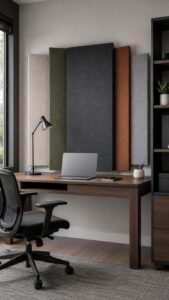
One darker panel can mark the center of the work zone. The layered surface adds quiet dimension and gives the desk a strong background for video calls or focused reading.
Add an Upholstered Screen Beside the Desk
Place a slim upholstered screen on the side facing a doorway, television, or busy part of the home. Choose a fabric that matches the wall panels so the screen feels architectural rather than temporary.
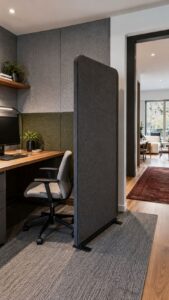
It can reduce visual distraction, create privacy, and define the study area without closing it behind a full wall.
Ground the Chair With a Dense Flat Weave Rug
Use a tightly woven rug beneath the desk and chair to soften movement and reduce noise from the floor. Select a low pile surface so the chair can move smoothly and edges remain safe.
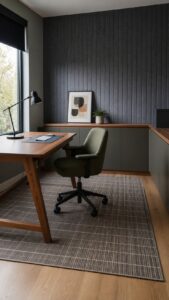
A subtle grid or narrow stripe can define the work area while allowing the felt wall to remain the main textural feature.
Dual Height Study Room With Sitting and Standing Zones
A dual height study room supports different kinds of concentration throughout the day. Detailed writing may feel best while seated, while reading, reviewing notes, or joining a brief call can happen at a higher surface.
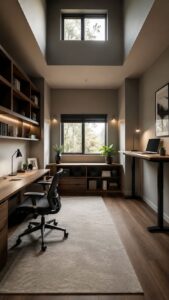
The room stays flexible when both stations share storage, lighting, and one coordinated color palette.
Center an Adjustable Desk in the Main Work Zone
Choose a height adjustable desk with enough depth for a screen, notebook, and lamp without crowding the surface. Keep the finish simple and place frequently used supplies in one side drawer.
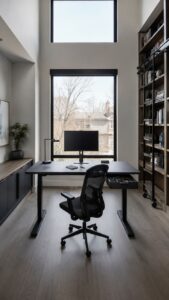
A supportive chair with adjustable height completes the setup. Leave clear floor space behind the desk so changing positions never feels difficult.
Mount a Standing Review Shelf Nearby
Install a narrow standing height shelf on an adjacent wall for reviewing cards, reading short chapters, or planning the next task. Keep it deep enough for an open book and a drink but shallow enough to preserve floor space.
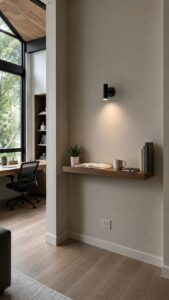
A small wall light above the shelf gives the second station its own identity.
Add a Resting Perch for Short Breaks
Place a compact stool or leaning seat near the standing shelf so the user can pause without returning to the main chair. Choose a stable design with a comfortable foot position.
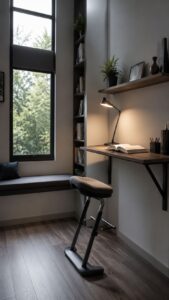
The perch supports short reading sessions and helps the room feel adaptable without adding another bulky armchair or lounge area.
Filtered Daylight Study Room With Soft Window Control
A daylight focused study room uses the window carefully rather than placing the desk directly in bright glare. The goal is to receive natural light from the side, soften sharp reflections, and preserve a view that gives the eyes somewhere distant to rest.
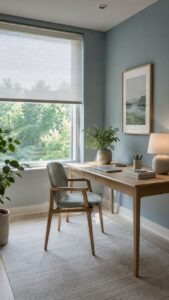
Pale wood, cloudy blue, cream, and soft green keep the room clear and calm.
Position the Desk Perpendicular to the Window
Place the desk so daylight reaches the work surface from one side instead of shining directly into the eyes or screen. This layout also keeps the outside view available without making it the only thing visible.
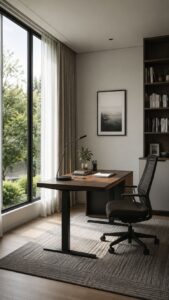
Leave enough room for curtains or shades to move freely and keep the chair away from cold glass during cooler months.
Layer a Translucent Shade With Side Curtains
Use a translucent roller or fabric shade to soften midday brightness while allowing the room to remain naturally lit. Add simple side curtains for stronger control during early morning or late afternoon.
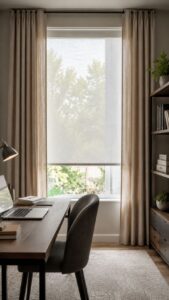
Choose plain fabric in a warm neutral so the window treatment supports concentration rather than becoming the busiest pattern in the room.
Brighten the Desktop With a Pale Matte Finish
Choose a pale wood or warm off white desktop with a matte surface that reflects daylight gently without producing harsh shine. Pair it with a darker desk mat to define the writing area and improve visual contrast.
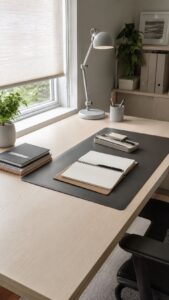
This combination keeps the work surface bright while making notebooks, devices, and small tools easier to locate.
Tambour Storage Study Room With Hidden Technology
Tambour storage uses sliding curved doors that disappear into the cabinet instead of swinging into the room. It is especially useful in compact study spaces where devices, paper, and charging equipment need to remain close but should not stay visible all day.
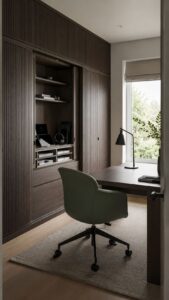
Dark oak, muted green, warm gray, and cream create a refined modern look.
Build a Device Compartment Behind a Roll Door
Use a tambour cabinet section for a laptop dock, tablet, headphones, and charging accessories. When the door closes, the technology disappears and the room immediately feels calmer.
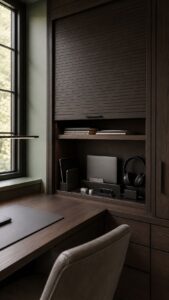
Add ventilation and keep power equipment accessible. A shallow shelf above the compartment can hold notebooks without mixing paper with cables.
Create an In Drawer Charging Station
Fit one drawer with divided spaces for cables, power banks, and small devices, then route power safely through the back of the cabinet. Each item should have a clear position so the drawer never becomes tangled.
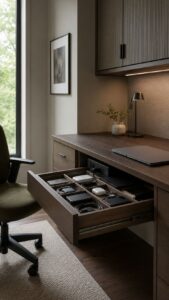
Closing the drawer removes visual clutter from the desk while keeping essential tools ready for the next session.
Hide Cables Inside a Rear Desk Channel
Use a covered channel along the back of the desk to guide power cords toward one outlet. Keep only the short section required for each device visible on the surface. Match the channel to the desk finish so it looks integrated.
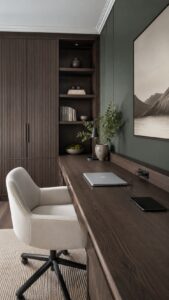
This small detail gives the entire room a more controlled and permanent appearance.
Research Island Study Room With a Shared Central Table
A research island study room places one generous table at the center for books, drawings, models, and collaborative work. Wall storage handles permanent materials while the middle remains available for changing projects.
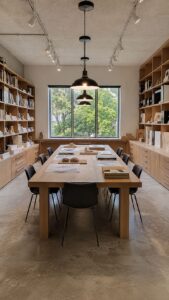
This arrangement suits a shared family room, creative learner, or anyone who needs more surface than a standard desk provides.
Divide the Table Into Clear Activity Zones
Use desk mats, shallow trays, or changes in material to identify separate areas for reading, writing, and making. Keep the center open for shared books or project pieces.
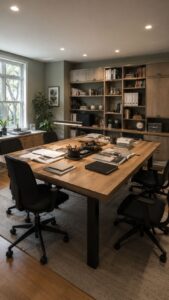
The zones should guide use without permanently fixing the table to one activity. Matching trays in different sizes create order while allowing the layout to change.
Suspend a Linear Light Above the Center
Hang one long light above the table so illumination reaches the full surface evenly. Choose a simple design with a diffuser that reduces glare on screens and glossy pages.
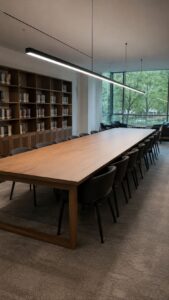
The fixture should follow the table length and remain high enough to preserve sight lines. A dimmer allows the room to shift from detailed work to relaxed reading.
Build a Reference Wall Behind One Side
Install vertical shelves for books, folders, sample boxes, and display objects on the wall nearest the table. Combine open sections with closed cabinets so useful materials remain visible while visual clutter stays contained.
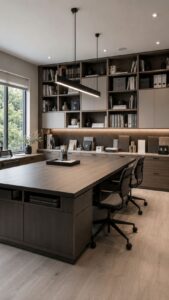
Keep the lowest shelves easy to reach from a seated position and reserve the highest areas for less frequently used resources.
Turn the Study Room Into a Place That Supports Real Progress
The best study room does not depend on decoration alone. It creates a clear relationship between focus, comfort, storage, light, and movement. An index cabinet organizes active knowledge, while acoustic felt brings quiet texture. Dual height stations support changing tasks, filtered daylight reduces visual strain, and tambour storage keeps technology controlled. A central research island provides room for larger projects and shared learning.
Choose one main layout idea and one supporting system, then repeat their colors and materials throughout the space. Related inspiration for home office storage, reading corners, desk organization, small room layouts, study lighting, and creative workspaces can help refine the room without making every feature compete for attention.
