
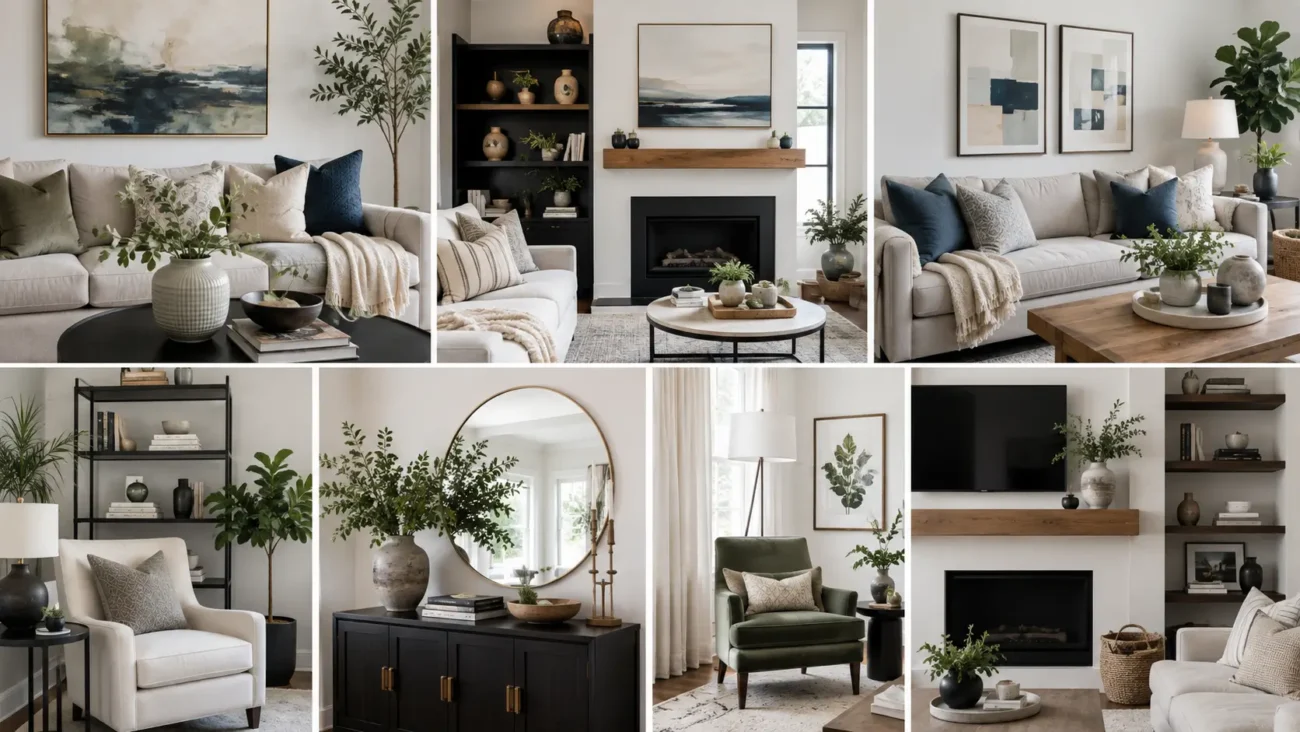
Living room decor works best when the space supports conversation, movement, and everyday routines. The six ideas below focus on layout, furniture shape, lighting, rugs, flexible storage, and the relationship between windows and seating.
Instead of buying a matching set, choose pieces with different silhouettes that share one color story or material connection. This creates a room that feels collected gradually while still looking intentional and comfortable.
Conversation Crescent Seating That Brings People Together
A conversation crescent changes the living room from a row of furniture facing one screen into a welcoming social arrangement. The sofa, chairs, bench, and table form a loose curve that allows everyone to see one another without blocking the walkway.
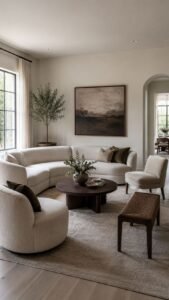
Keep the largest piece visually quiet, then bring character through two smaller seats with different shapes.
Float the Sofa Several Inches From the Wall
Move the sofa forward enough to create a visible strip of floor behind it. This small change gives the seating area more presence and prevents the room from feeling lined around the edges.
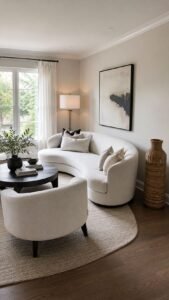
Place a floor lamp or one tall basket near the back corner so the new gap looks deliberate.
Pair One Swivel Chair With a Backless Bench
Use a rounded swivel chair on one side of the sofa and a slim upholstered bench on the other. The chair can turn toward conversation, reading, or a nearby window, while the bench keeps the view across the room open.
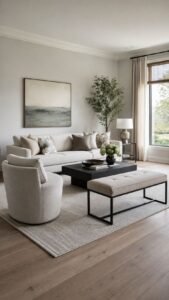
Choose fabrics that relate through color rather than matching exactly. This combination avoids the heavy appearance of two identical armchairs.
Anchor the Curve With an Oval Coffee Table
An oval coffee table follows the movement of a crescent layout and softens the spaces between different seats. Choose a size that leaves comfortable walking room around every edge.
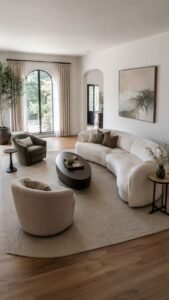
Keep the surface edited with one tray, a low vessel, and open space for drinks or books.
Skirted Game Table Corner With Hidden Everyday Function
A skirted game table creates a useful destination inside the living room without making the room feel like an office or dining area. The fabric softens a round table and can conceal games, craft supplies, chargers, or serving pieces underneath.
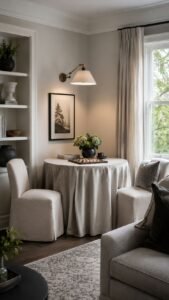
A tailored skirt, compact chairs, and focused lighting give the area its own identity.
Choose a Round Base With a Tailored Fabric Skirt
Start with a sturdy round table that fits two chairs without crowding the circulation path. Cover it with a fitted skirt that reaches close to the floor and includes neat vertical folds.
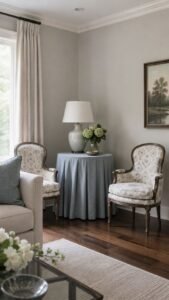
Repeat the fabric tone in one cushion across the room so the table feels connected.
Add Interior Pockets for Games and Supplies
Sew broad pockets into the inside of the skirt where they remain hidden. Use them for playing cards, notebooks, pencils, charging cables, or lightweight craft materials. Place heavier items in a lidded box beneath the table so the fabric hangs evenly.
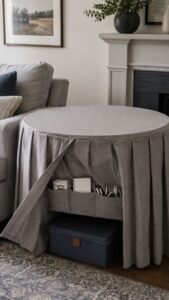
This storage keeps the tabletop clear and allows the corner to change purpose easily.
Hang One Shaded Light Directly Above
A small shaded pendant centered over the table creates focused light and makes the corner feel established. Choose a fabric, paper, or opaque glass shade that directs brightness downward without glaring across the room.
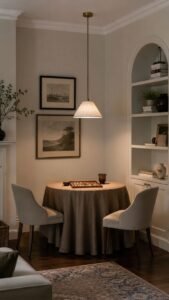
Use a dimmable bulb for detailed tasks and softer evening use.
Rug Island Layout That Defines More Than One Activity
A rug island layout uses different floor shapes to organize the living room without adding partitions. One large rug grounds the sofa and main chairs, while a smaller round or irregular rug marks a separate seat, music corner, or occasional table.
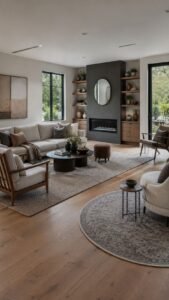
The rugs should not look like a matching set. Connect them through one repeated color, similar texture, or related border.
Ground the Main Seating With a Generous Base Rug
Choose a rug large enough for the front legs of the sofa and nearby chairs to rest on its surface. A larger size often makes the room appear calmer because the furniture no longer seems to float around a small center rectangle.
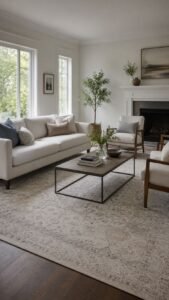
Select a quieter pattern for this foundation so smaller rugs and accessories can introduce stronger color.
Place a Circular Rug Beneath One Side Chair
Use a round rug to create a distinct pause beside the main conversation area. It can hold one sculptural chair and a compact table for reading, music, or morning coffee.
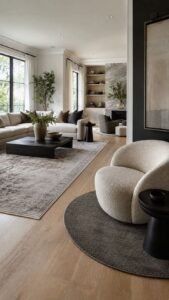
Let a small strip of bare floor remain between the two rugs so each shape stays visible. Choose a deeper color that already appears in the main rug.
Guide the Entry With a Narrow Runner
A narrow runner can connect the room entrance to the seating area while protecting a high traffic path. Stop it before the main rug so the floor remains visible between both pieces.
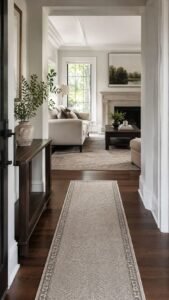
A subtle border or directional pattern can lead the eye inward. This helps guests understand the circulation route and keeps furniture away from the busiest walkway.
Lamp Constellation Lighting With Three Distinct Heights
A lamp constellation replaces one overpowering ceiling light with several smaller sources positioned at different heights. The arrangement can include a floor lamp beside the sofa, a table lamp near a secondary seat, and a compact wall light aimed toward a textured surface.
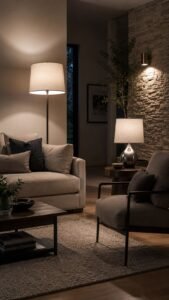
The fixtures do not need to match, but their shades or finishes should share one connection. Layered light makes the room adaptable for reading, conversation, and relaxed evenings.
Place a Tall Shaded Lamp Beside the Sofa
Choose a floor lamp that casts light downward and outward rather than directly into the eyes. Position it near the sofa arm where it can support reading and illuminate the seating group.
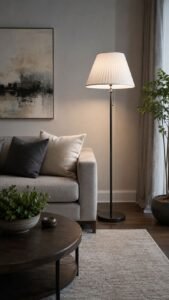
A pleated shade, broad drum, or tapered form adds shape even when the lamp is switched off. Keep the base clear of the main walking route.
Use a Small Lamp on an Unexpected Surface
Set a compact lamp on a low cabinet, deep windowsill, or sturdy side shelf rather than placing every light on a traditional end table. This creates a lower pool of brightness that makes the room feel layered.
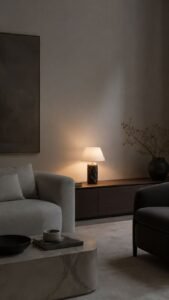
Choose a lamp with a distinctive base but a simple shade. Leave open space around it so the light can spread.
Aim a Wall Light Toward Texture Instead of Artwork
Install a small adjustable wall light and direct it toward textured plaster, woven material, carved wood, or a softly finished corner. The reflected light brings depth to the surface without requiring a large display.

Position the fixture above eye level and angle it away from seating. This gentle highlight gives the room character after brighter lamps are dimmed.
Sofa Back Library Spine With Storage and Display
A sofa back library spine uses the space behind a floating sofa for books, charging, display, and occasional serving. Instead of a plain console, choose a long piece with open compartments, shallow drawers, and a stable top.
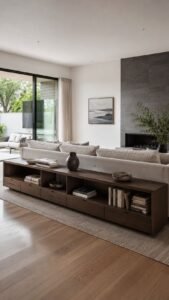
Its height should stay below the sofa back so the room remains open. This idea works well where the back of the sofa needs a visual purpose and a gentle boundary.
Divide the Lower Section Into Book Compartments
Create several open sections beneath the top and size them for art books, magazines, and small storage boxes. Alternate vertical books with short horizontal stacks so the arrangement feels natural.
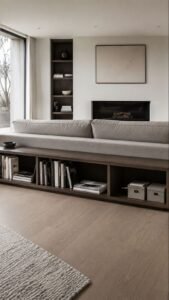
Leave one compartment partly empty to prevent the unit from appearing overfilled. The books add color while keeping frequently used reading material within reach.
Build a Shallow Charging Drawer Into One End
Reserve one drawer for phone chargers, headphones, remote controls, and small electronics. Add a rear opening for cables and use simple dividers to keep cords separated.
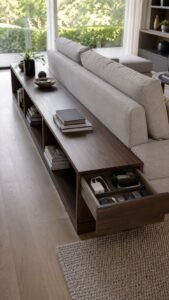
Position the drawer near the seat most often used for reading. Hiding these items reduces visual clutter while keeping them easier to reach.
Style the Top With One Tall and One Low Group
Place a taller lamp or vessel near one end of the console and a lower tray or stack near the other. Keep the middle section mostly open so it can hold drinks or serving pieces when guests arrive.
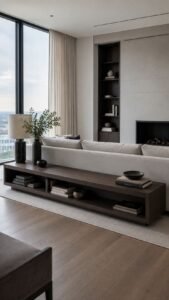
The difference in height creates balance without a row of small ornaments. Choose objects that look attractive from both sides.
Window Bench Bridge That Turns Daylight Into a Destination
A window bench bridge creates a low continuous feature beneath a living room window while preserving the glass and daylight above. It can provide extra seating, concealed storage, or a place for books without introducing a tall cabinet.

The bench should feel connected to the architecture through its width and finish. Use a removable cushion only where people will sit, leaving part of the surface clear for a tray or display.
Extend the Bench Beyond the Window Frame
Make the bench wider than the window so it feels like a deliberate furniture element rather than a narrow seat fitted into an opening. The extended ends can support a lamp, books, or one sculptural object.
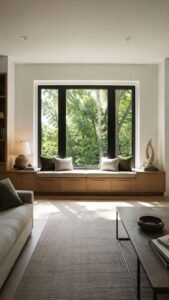
Match the bench finish to nearby woodwork or choose a contrasting paint color that already appears elsewhere in the room.
Add Lift Up Storage Beneath the Seat
Use hinged sections under the cushioned area for blankets, board games, seasonal covers, or serving pieces. Divide the interior so everything remains easy to retrieve. Install soft closing hardware and leave a small finger gap for safe opening.
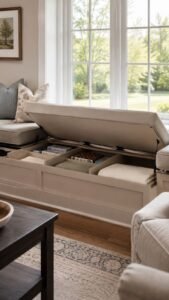
The concealed storage helps the room stay orderly without adding another freestanding cabinet.
Finish One End as a Removable Tray Zone
Leave one end of the bench without a cushion and place a fitted removable tray on the surface. It can hold tea, a book, or a small arrangement during the day, then lift away when extra seating is needed.
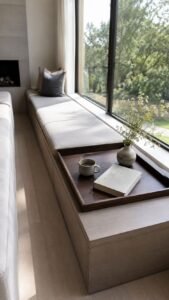
A tray in contrasting wood or lacquer gives the bench a finished detail while protecting the surface from spills.
Give Living Room Decor a Clear Purpose and Personal Voice
Memorable living room decor grows from decisions that improve both the appearance and the experience of the space. A conversation crescent encourages connection, while a skirted game table gives an unused corner a flexible role. Rug islands organize activities without walls, and a lamp constellation changes the atmosphere throughout the day. A sofa back library spine adds practical storage, while a window bench bridge turns daylight into a useful destination. Choose the ideas that answer real needs, then connect them through repeated colors, finishes, or shapes. You can also explore related articles about small living room layouts, wall decor, coffee table styling, living room lighting, rug placement, storage furniture, and color combinations.
