
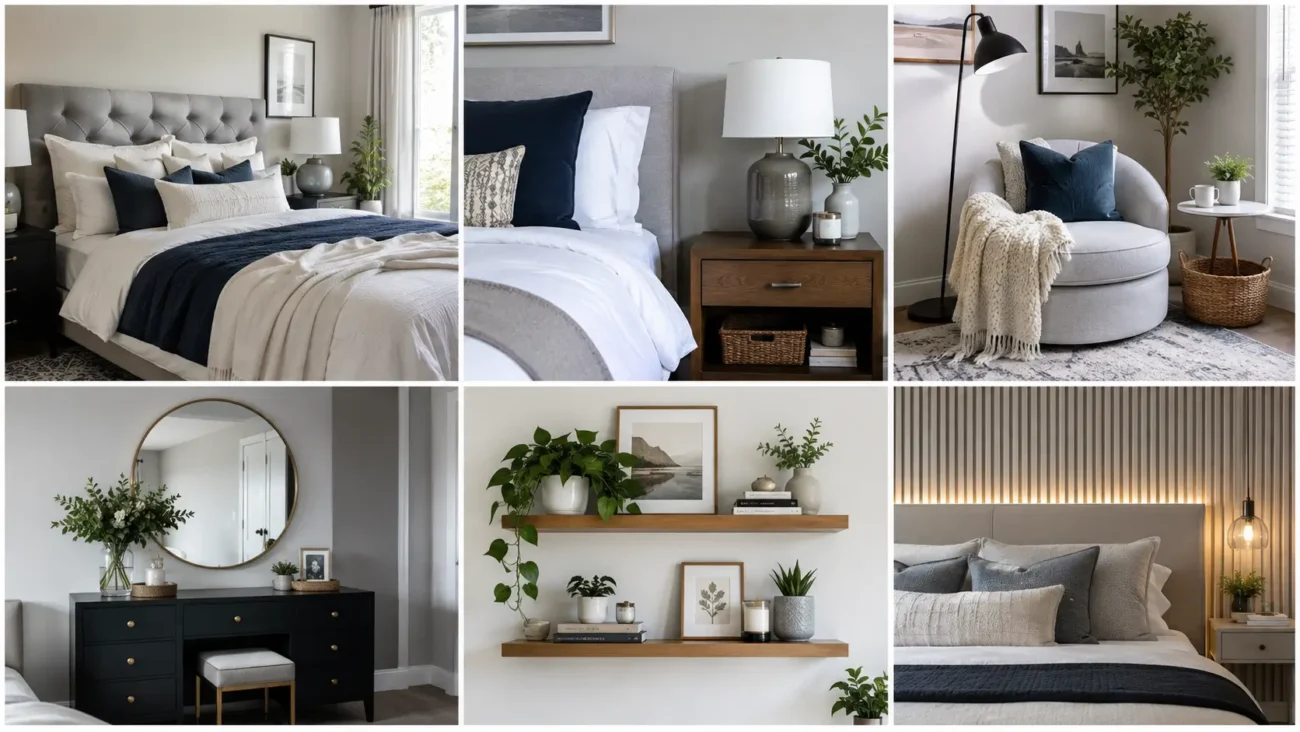
A successful room decor bedroom plan should make the space restful, personal, and easy to use from morning until night. The strongest bedrooms do not fill every surface with ornaments. They rely on one clear idea, comfortable materials, practical storage, and lighting that changes with the mood. The concepts below explore framed bed alcoves, continuous bedside ledges, painted ceiling ribbons, folding dressing screens, floor level reading islands, and vanity gallery corners.
Each idea includes three different ways to shape the look without repeating the same furniture arrangement or decorative formula. The goal is a bedroom that feels collected and distinctive while supporting sleep, dressing, reading, and everyday routines.
Draped Bed Alcove That Creates a Soft Private Retreat
A draped bed alcove gives the sleeping area a clear boundary without requiring a permanent wall or traditional four poster frame. Fabric can begin at the ceiling, wrap around one or two sides, and stop before the room feels enclosed. Linen, cotton velvet, and softly woven panels create visual depth while making the bed feel protected.

This idea suits large rooms that need intimacy and compact bedrooms where the bed deserves a stronger identity. Choose one quiet fabric color, then let the folds, lighting, and furniture placement provide the detail.
Suspend a Ceiling Track Around Two Sides
Install a slim ceiling track above the head and one side of the bed, then hang full length curtains that can remain open during the day. Warm ivory, muted clay, soft sage, or dusty blue creates a calm frame without looking theatrical.

Make the panels wide enough to form generous folds and leave a small gap behind them so the fabric hangs cleanly.
Add Upholstered Wings Beside the Headboard
Place narrow upholstered panels on both sides of the headboard to create the feeling of a built in sleeping niche. Finish them in textured linen or soft wool and make them slightly taller than the bed.

A compact wall light on each wing keeps the nightstands clear and makes the entire arrangement feel planned rather than improvised.
Light the Upper Edge With a Hidden Glow
Conceal a warm light strip where the alcove meets the ceiling. The light should wash upward rather than shine directly toward the pillow. This gentle glow gives the bed depth during the evening and allows the main ceiling fixture to remain off.
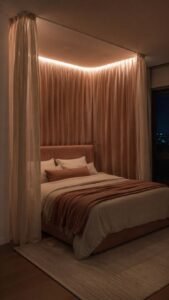
It also makes the fabric folds or padded panels appear softer after dark.
Continuous Bedside Ledge That Replaces Scattered Small Tables
A continuous bedside ledge creates one calm horizontal line behind or beside the bed. Instead of using two unrelated nightstands, a slim shelf can hold lamps, books, water, and personal objects without crowding the floor.

It may stretch across the full wall or stop just beyond each side of the bed. Wood, painted plaster, or stone can give it a furniture quality. Keep the top carefully edited so the ledge feels useful and intentional rather than becoming another surface covered with clutter.
Extend the Ledge Beyond Both Pillows
Run a narrow shelf from one side of the bed wall to the other, leaving enough depth for a small lamp and a book. The long line visually widens the bedroom and connects both sleeping sides.

Paint it the same color as the wall for a quiet result, or choose dark wood when the room needs stronger contrast and definition.
Build One Concealed Drawer Into Each Side
Add a shallow drawer beneath the ledge near each side of the mattress. These drawers can hold charging cables, reading glasses, hand cream, medication, and other small items that usually crowd a nightstand.
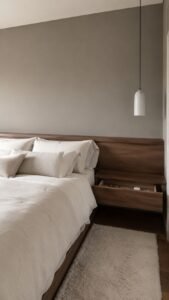
Choose handle free fronts or recessed pulls so the storage disappears into the design and the horizontal shape remains clean.
Create a Rotating Display Zone in the Center
Reserve the middle section above the headboard for a small group of objects that can change through the seasons. A framed sketch, one sculptural vessel, and a short stack of books are enough.

Leave visible space around them and keep practical bedside items near the outer edges so the display feels balanced rather than overly styled.
Painted Ceiling Ribbon That Changes the Room Proportion
A painted ceiling ribbon brings color overhead without covering every wall in a strong shade. The color begins on the ceiling, continues a short distance down the walls, and forms a visual canopy around the bedroom. It can make a tall room feel more intimate or give a plain space a finished architectural detail.

Muted plum, mineral blue, olive, cocoa, and warm terracotta work beautifully when the lower walls stay quiet. Repeat the ceiling color in only one or two textiles so the room feels connected without becoming overly matched.
Drop the Color Twelve Inches Down the Walls
Paint the entire ceiling and continue the shade down the upper section of every wall. A crisp horizontal boundary creates the appearance of a lowered ceiling plane and makes tall bedrooms feel calmer.

Use warm white or pale beige below the band, then repeat the upper color in one cushion, artwork detail, or bedside object.
Frame the Bed With a Wider Painted Section
Create a deeper ceiling ribbon above the bed wall and a narrower one around the remaining room. This subtle variation directs attention toward the sleeping area without requiring wallpaper or an oversized headboard.

Keep the edges straight and use the same paint finish throughout so the difference feels architectural instead of looking like random color blocking.
Soften the Boundary With a Curved Corner
Shape a broad curve where the ceiling band drops lower near one corner instead of ending it with a rigid line. The curve can frame a chair, plant, floor lamp, or small table and make the paint treatment feel custom.

Limit this detail to one location so it remains an unexpected feature rather than a repeated motif.
Folding Dressing Screen That Hides Everyday Functions
A folding dressing screen introduces privacy, shape, and surface detail while helping one bedroom support several activities. It can conceal an open clothing rail, create a changing area, or hide a small desk after work. Unlike a fixed partition, the screen can move whenever the layout changes.

Choose solid timber, woven panels, padded fabric, or painted canvas depending on the room. It should relate to the bed and flooring without matching them exactly, while its placement can create a useful backdrop for a chair, mirror, or dressing table.
Conceal an Open Rail Behind Woven Panels
Position a three panel screen in front of a simple garment rail so everyday outfits remain easy to reach but do not dominate the bedroom.

Woven cane or paper cord allows some light to pass through and keeps the divider from feeling heavy. Leave enough space behind it for hangers to move freely and clothing to remain organized.
Turn the Reverse Side Into a Full Length Mirror
Attach a lightweight mirror to the panel facing the dressing area. When the screen is closed, the reflective surface stays hidden from the bed, helping the sleeping zone feel calmer.
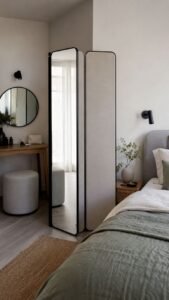
When opened, it becomes a practical place for checking outfits. Keep the remaining panels matte so the mirror feels useful instead of visually overwhelming.
Hide a Work Surface at the End of the Day
Place the screen between the bed and a compact desk, then open it while working and close it before the evening. A fabric covered screen softens the visual presence of electronics, notebooks, and paperwork.

Add a small hook behind one panel for headphones or charging cables so the workspace can be reset quickly.
Floor Level Reading Island With Relaxed Layered Comfort
A floor level reading island creates a separate place to slow down without adding a bulky armchair. It can sit beside a window, in an empty corner, or at the foot of the bed. The arrangement begins with a generous rug, low cushions, and one stable surface for a drink or book.

This idea suits bedrooms where furniture already fills the walls but one corner still feels unfinished. Use firm cushions, washable covers, and focused lighting so the area remains comfortable and practical instead of resembling temporary floor seating.
Anchor the Corner With a Round Wool Rug
Choose a round or softly shaped rug large enough to hold the complete reading arrangement. The curved outline separates the nook from the rectangular bed and makes an unused corner feel intentional.

Select a dense flat weave or low pile surface that supports the cushions evenly and remains easy to clean around the outer edges.
Combine One Firm Back Cushion With a Bolster
Place one large upright cushion against the wall and add a cylindrical bolster for the lower back or neck. Avoid filling the area with many small pillows that require constant arranging.
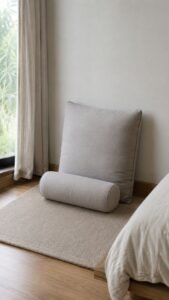
Two supportive pieces in different textures create enough comfort while keeping the reading island visually calm, practical, and easy to reset.
Add a Low Table With a Directional Lamp
Use a compact table that sits slightly higher than the seat cushions and has enough weight to remain stable. A small adjustable lamp can direct light toward a book without brightening the entire bedroom.

Keep the cord close to the wall and leave most of the table surface open for a drink, book, or reading glasses.
Vanity Gallery Corner That Connects Dressing and Decoration
A vanity gallery corner combines grooming, personal display, and bedroom decor in one carefully arranged zone. Instead of placing a mirror above a random table, build the corner around a clear composition of light, artwork, and useful storage. A narrow desk, vintage console, or wall mounted surface can become the base.

The mirror should suit the available light, while the artwork should reflect personal taste without crowding the wall. This creates a polished fashion focused area and keeps cosmetics, jewelry, and hair accessories away from the bed.
Offset the Mirror Beside a Framed Print
Mount the mirror slightly to one side of the vanity and balance it with one framed print on the other. The uneven arrangement feels more collected than a perfectly centered setup.

Choose frames with a shared material or tone, then keep the artwork simple enough that it complements the reflection instead of competing with it.
Store Daily Accessories in Shallow Drawers
Use a vanity with shallow drawers divided into sections for jewelry, hair tools, makeup, and clothing accessories. Keeping these items below the surface allows the gallery wall and lighting to remain the focus.
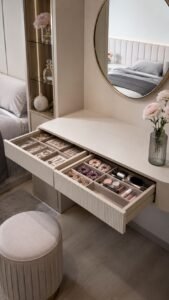
Line the drawers with fabric or removable trays so delicate pieces stay separated, protected, and easy to find during busy mornings.
Place a Sculptural Lamp at Eye Level
Add a compact lamp with an interesting shade or base beside the mirror, positioned near face height when seated. Warm diffused light feels softer than a bare overhead bulb and creates a more relaxed atmosphere.
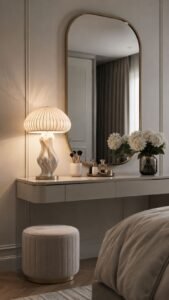
Choose a form that looks decorative even when switched off, allowing the lamp to support both the dressing routine and the room design.
Let Your Bedroom Decor Support the Way You Live
The most successful bedroom is not simply filled with attractive objects. It gives every part of the room a clear purpose while protecting the calm needed for rest. A draped alcove makes the bed feel private, while a continuous ledge organizes small essentials. A painted ceiling ribbon changes the room proportion, and a folding screen hides busy functions when they are not needed. A floor reading island adds comfort without heavy furniture, while a vanity gallery corner creates a polished place for personal styling. You can also explore related articles about small bedroom layouts, bedroom lighting, closet organization, wall decor, bedding combinations, dressing areas, and relaxing color palettes to continue shaping a complete interior.
