
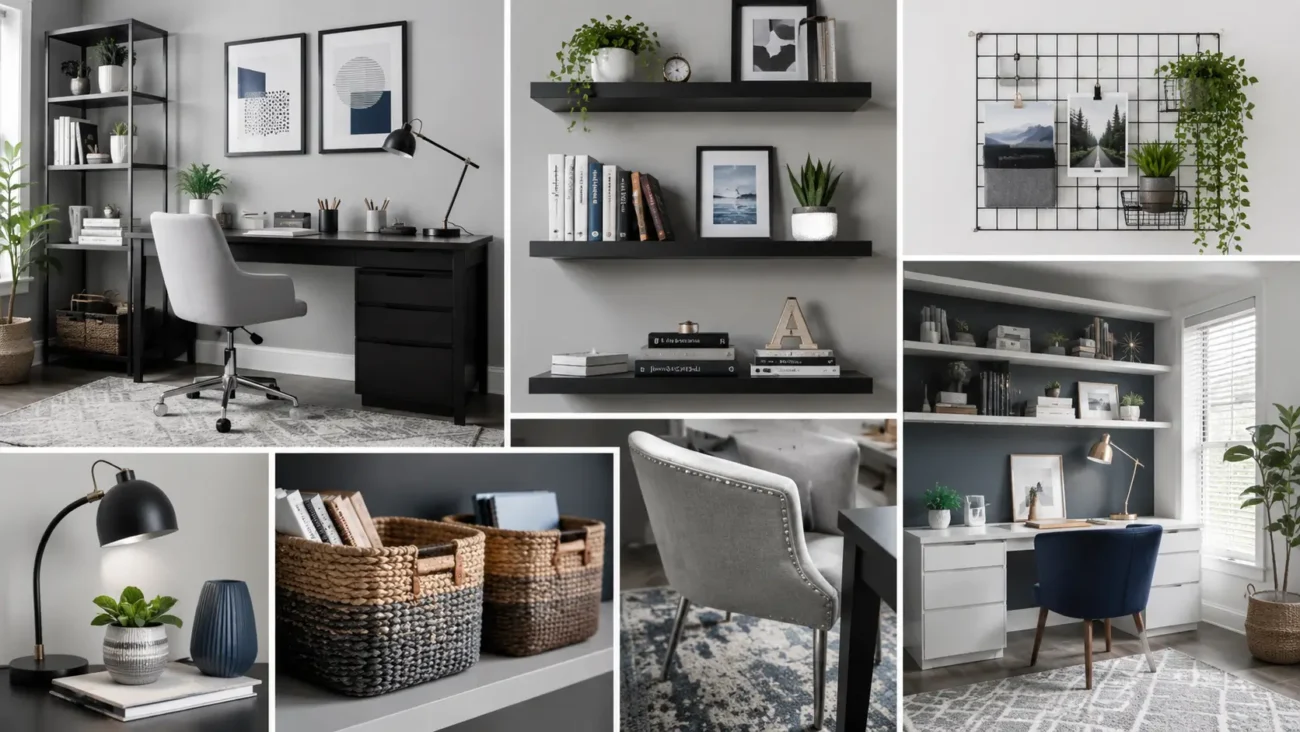
Study room decor should make the space feel inviting before the first book is opened or the first task begins. The strongest rooms combine visual calm, comfortable proportions, meaningful objects, and enough character to keep long sessions from feeling dull. Plum brown, chalk blue, muted sage, parchment, dark oak, and warm cream create a focused palette without turning the room into a formal office.
The six ideas below explore deep color, tall library storage, sheltered furniture, oversized artwork, personal displays, and subtle geometric structure. Each direction can be adapted for a dedicated room, a compact homework space, or a quiet corner that needs a clearer identity.
Plum Brown Study Cocoon With Concentrated Color
Plum brown creates a grounded atmosphere that can make a study room feel separate from the busier parts of the home. It carries more warmth than charcoal and pairs beautifully with cream paper, dark oak, and muted metal.
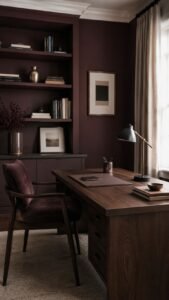
Use the color across one large surface and repeat it carefully through smaller objects so the room feels enveloping rather than heavy.
Wrap the Desk Wall in One Deep Shade
Paint the wall behind the desk in plum brown and continue the same color across nearby shelving or trim. Keeping the background consistent gives books, artwork, and the desk a stronger outline.
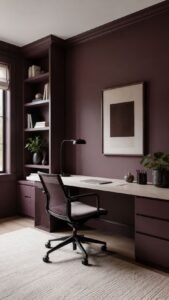
Choose a matte finish, then balance the darker wall with a pale desktop and light colored rug.
Paint the Ceiling One Step Lighter
Choose a softened version of the wall shade for the ceiling instead of leaving it bright white. The related color makes the room feel complete without a sharp contrast overhead.
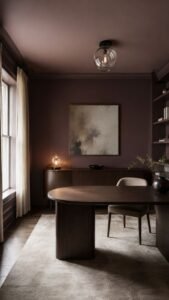
A lighter plum taupe can create the effect without visually lowering the room. Cream curtains and clear glass lighting will help preserve brightness.
Brighten the Desk With Parchment Accessories
Use parchment colored folders, storage boxes, a desk mat, and one ceramic cup to lift the deeper background. Keep the shapes simple and repeat the same warm pale tone.
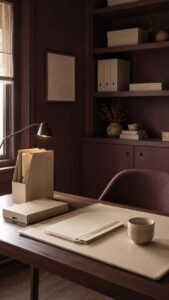
The contrast makes daily tools easier to locate and gives the work surface a clean visual center without removing personality from the room.
Library Ladder Wall With Vertical Drama
A library ladder wall turns storage into the main architectural feature of the study room. Tall shelves use vertical space efficiently and create the atmosphere of a private reading library, while lower sections can hold everyday materials within easy reach.
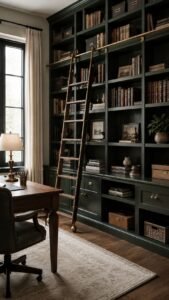
Dark green, warm cream, walnut, and aged brass give the arrangement depth. The contrast also helps books and storage boxes remain easy to see without turning the wall into a crowded display.
Carry Shelving Close to the Ceiling
Extend bookcases toward the ceiling and reserve the upper shelves for archived folders, reference books, and decorative boxes used less often. Keep the lower shelves open for current reading and study supplies.

Repeating shelf heights creates order, while taller compartments can accommodate art or larger volumes.
Add a Slim Rolling Ladder
Choose a narrow ladder that moves securely along a fitted rail and rests close to the shelving when not in use. Match the ladder finish to the bookcases so it looks integrated.
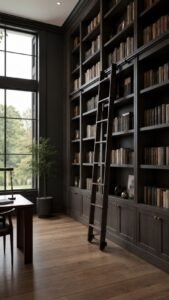
Include safe handholds and clear floor space, then use it only where the wall structure and installation can support the system properly.
Reserve One Shelf for Displayed Books
Place a shallow front facing shelf at eye level for current books, inspiring covers, and a rotating monthly selection. A few displayed titles create a visual pause between rows of spines.
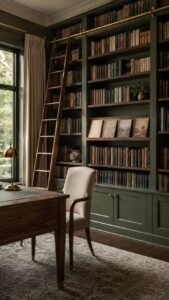
Change the selection as projects and interests shift, allowing the study room decor to evolve without replacing furniture or covering the room with extra accessories.
Curved Carrel Desk With a Sheltered Work Zone
A curved carrel creates a focused space by gently wrapping the desk with side panels or an arched surround. The shape provides visual privacy without enclosing the user completely.
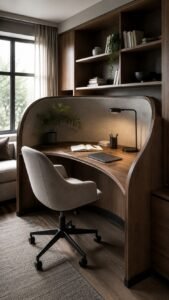
Soft upholstery, warm wood, and controlled lighting can make the station feel comfortable rather than institutional.
Shape Low Wings Around the Desktop
Add two curved side panels that rise slightly above the desktop and stop below eye level. The wings reduce peripheral movement while preserving airflow.
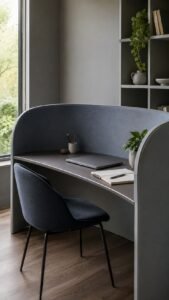
Cover them in durable fabric or painted wood, then keep the inner surface quiet so notes and screens remain the main points of attention.
Upholster the Inner Curve in Soft Fabric
Use a tightly woven fabric in sage, warm gray, or faded blue along the inside of the carrel.
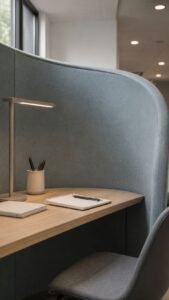
The material introduces softness and can reduce the sharp echo created by bare walls and hard desks. Choose a plain texture and firmly finished edges for easy maintenance.
Mount a Focused Light Under the Arch
Install a narrow light beneath the upper curve or along the rear panel so illumination falls directly across the work surface. A diffused warm light supports reading and writing without a visible bulb.
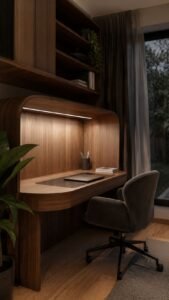
Keep the switch easy to reach from the chair and pair the focused light with softer room lighting for comfortable evening use.
Oversized Print Study With Graphic Inspiration
One oversized print can give a study room more character than a crowded wall of small motivational pieces. Botanical diagrams, architectural drawings, and enlarged maps provide interest while keeping the room calm.
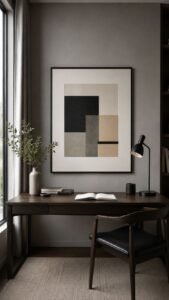
Choose an image connected to the work or interests of the person using the room, then let it establish the palette for nearby decor.
Hang One Large Print Behind the Desk
Select artwork wide enough to relate clearly to the desk. Center it with the furniture or place it deliberately to one side when a lamp balances the opposite edge.
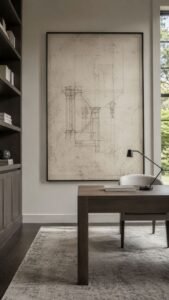
A simple frame and generous margin will keep the image readable during video calls and from across the room.
Pull Two Colors Into Useful Objects
Choose two quiet shades from the artwork and repeat them through folders, a lamp base, chair fabric, or storage boxes. This makes practical pieces feel connected without forcing an exact match.
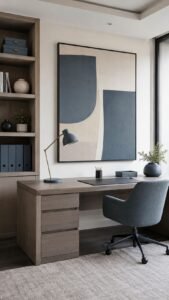
Keep larger furniture neutral so the selected colors can move through the room in small, controlled amounts.
Create a Picture Light Wash
Place a slim picture light above the artwork or use concealed lighting that washes gently down the wall. The illumination gives the print presence after sunset.

Select a warm tone that preserves the artwork colors and position the fixture so reflections do not interfere with screens or glossy framing.
Meaningful Object Shelves With Edited Personality
Personal objects can make a study room feel supportive when they are displayed with intention rather than scattered across every surface. Travel finds, inherited pieces, ceramics, and small artworks can recall experience and progress.
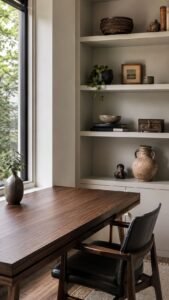
The key is to group related items, leave breathing room, and keep the main desk clear for active work.
Build One Shelf Around a Personal Story
Choose three to five objects connected by one memory, place, or interest and arrange them on a single shelf. A photograph, small vessel, ticket, and book can tell a complete story.
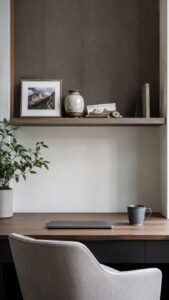
Vary the height, keep one area empty, and use a tray or book stack to give the smallest pieces a stable base.
Mix Useful Tools With Decorative Pieces
Display a distinctive letter opener, magnifying lens, ceramic pencil cup, or small clock beside artwork and books. Functional objects bring authenticity to the daily routine.
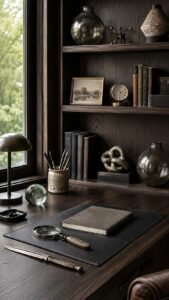
Choose materials that repeat elsewhere in the room, such as dark wood, aged metal, or cloudy glass, so the collection feels connected rather than random.
Rotate the Display With Current Projects
Change one shelf according to the subject, creative project, or season of study. A design project might introduce material samples, while a history topic could bring maps and reproduced documents.
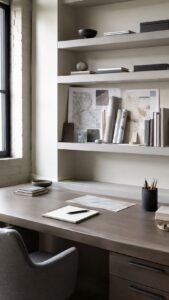
Store removed items instead of adding new layers continuously. Rotation keeps the room stimulating while preserving enough open space for the eye to rest.
Soft Geometric Study With Quiet Pattern Structure
Geometric pattern can organize a study room visually when it is used in limited areas and softened through related colors. Gentle grids, broad curves, and stepped shapes create rhythm without distraction.
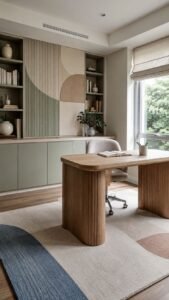
Warm cream, dusty sage, pale clay, and muted blue keep the pattern calm enough for long reading and work sessions.
Paint a Framed Grid Inside Wall Panels
Add a subtle grid pattern inside one or two wall panels using colors close to the main wall shade. Broad lines and generous spacing will feel architectural.
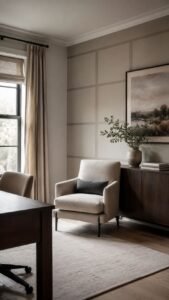
Position the design behind a reading chair or storage cabinet rather than directly in front of the desk, allowing it to add structure without dominating the work view.
Ground the Desk With a Curved Rug
Choose a rug with one large arc, stepped border, or oversized rounded form instead of a dense repeating print. Place the desk and chair partly within the shape so the pattern defines the work zone.
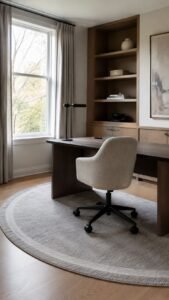
A low pile surface allows smooth chair movement while muted colors connect the room.
Repeat One Shape Through Small Details
Select one form from the rug or wall design and echo it through bookends, a lamp silhouette, or drawer pulls. Repetition creates coherence without copying the full pattern.
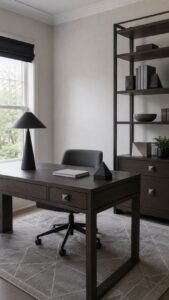
Keep the number of repeated objects low so the geometry feels considered and the study retains a calm, practical atmosphere.
Create a Study Room That Feels Ready Before You Begin
The best study room decor supports focus while still reflecting the person who uses the space. Plum brown creates a concentrated color cocoon, while a library ladder wall gives storage architectural presence. A curved carrel provides a sheltered work zone, oversized artwork brings graphic inspiration, and meaningful shelves add personal character. Soft geometric details finish the room with quiet structure.
Choose one main idea and one supporting layer, then repeat their colors and materials with restraint. Related inspiration for study room layouts, desk organization, home office lighting, reading spaces, and small room storage can help refine the design. A room that feels calm, personal, and easy to use can make beginning the next task feel far less difficult, especially when every object has a purpose and every visual detail supports concentration.
