
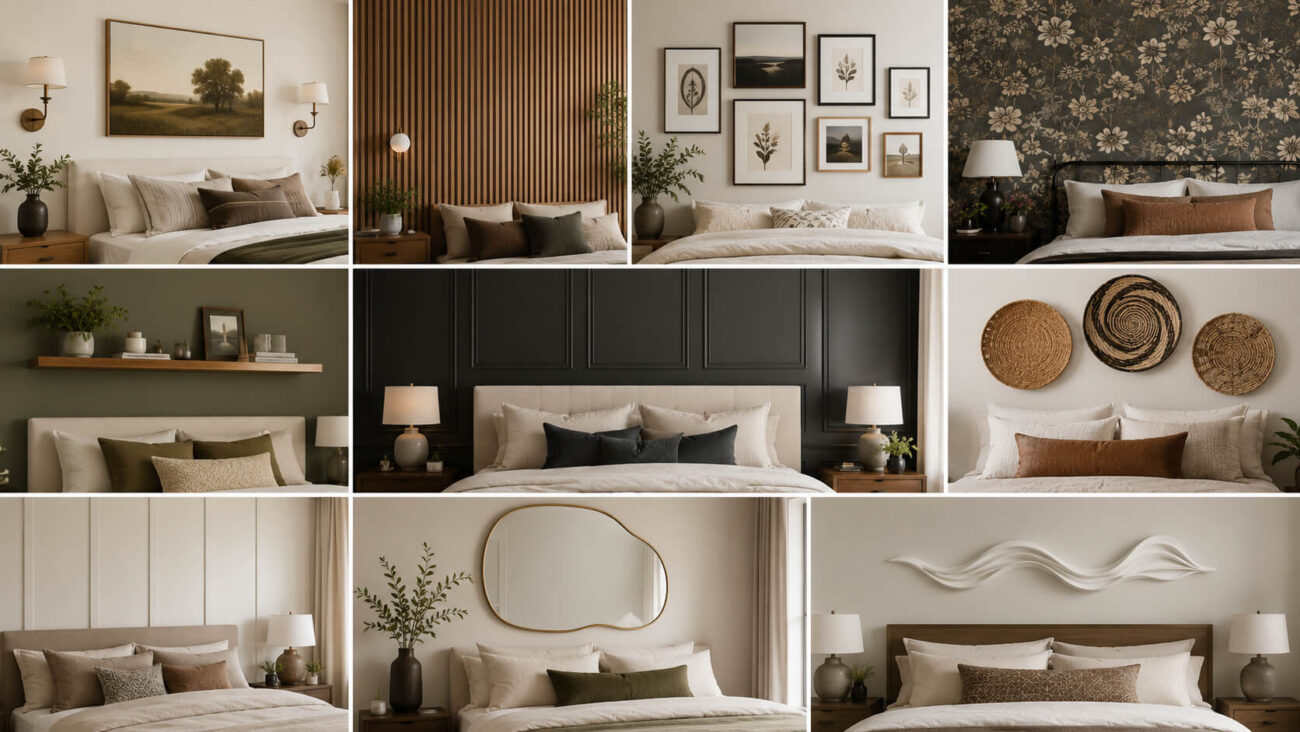
Bedroom wall decor can completely change how finished, comfortable, and personal a room feels. Thoughtful artwork, texture, and color can pull the whole scheme together. The best approach is not to cover every surface. Choose one strong wall story, then support it with quieter details.
A panoramic mural can create escape, molding can add tailored depth, and sculptural objects can bring character. The ideas below suit compact rooms, spacious bedrooms, rental friendly updates, and complete makeovers while keeping the atmosphere restful.
Panoramic Mural Walls That Create an Instant Escape
A panoramic mural turns the wall behind the bed into a complete scene rather than a repeating pattern. Misty landscapes, oversized botanical studies, cloudy skies, architectural sketches, and abstract brushwork can make the bedroom feel deeper and more expressive.

Choose colors already present in the bedding or furniture so the mural belongs to the room. Keeping the surrounding walls quieter allows the image to remain dramatic without making the bedroom visually busy.
Choose a Scene With a Calm Horizon
Landscapes with a visible horizon draw the eye across the room and can make a narrow wall feel wider. Soft hills, distant trees, coastal views, or hazy fields work especially well behind a low bed. Select muted colors, then repeat one or two shades through cushions, a throw, or a bedside lamp.

Let the Artwork Continue Around a Corner
Wrapping part of the mural onto an adjoining wall creates an immersive effect and prevents the image from looking like a large poster. This works when the bed sits near a corner or shallow alcove. Keep the continuation limited so the scene feels intentional rather than overwhelming.

Balance the Mural With Simple Bedding
A detailed wall needs calm bedding to prevent competing focal points. Choose solid sheets, a lightly textured duvet, and cushions in colors pulled from the scene. Avoid repeating the exact imagery on fabrics. The wall should carry the storytelling while the bed remains inviting, comfortable, and visually quiet.

Framed Wall Molding That Gives the Bedroom Tailored Depth
Wall molding creates architectural interest even when the room began as a plain box. Wide rectangular frames, narrow vertical panels, and curved corner details can add rhythm behind the bed without filling the wall with separate objects.
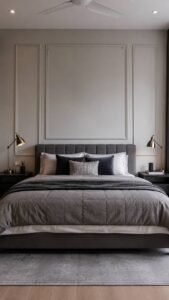
Painting the molding and wall in one shade keeps the effect calm, while contrast makes the structure more graphic. Plan every panel around the bed, nightstands, and ceiling height.
Build One Oversized Frame Behind the Bed
A single large molding frame can visually replace a traditional headboard and give the bed a clear position. Make it wider than the mattress so it also connects the bedside tables.
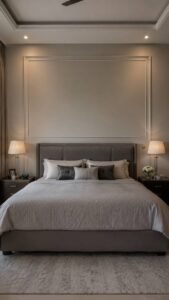
Leave enough open wall inside for a small artwork, fabric panel, or uninterrupted color. The structure feels elegant without requiring many decorative pieces.
Use Tonal Paint to Highlight the Relief
Paint the wall in a matte finish and the molding in a slightly glossier version of the same color. The change in reflection reveals the raised detail without adding another shade. Deep clay, warm taupe, dusty blue, and soft olive can create a sheltered result that shifts gently with daylight.

Place Art Inside Selected Panels
Not every molding frame needs artwork. Hanging one picture inside the central panel and leaving the others empty creates focus and breathing room. Choose a piece that fits comfortably within the border. A landscape, charcoal drawing, or textile work can add personality while the molding keeps the arrangement orderly.

Decorative Screen Walls That Add Height and Pattern
A decorative screen can act like a removable architectural feature behind the bed. Carved wood, woven cane, painted panels, and open lattice designs add height without permanently changing the wall.

This approach works well when the room needs a focal point but wallpaper feels too committed. Choose a screen wider than the headboard or use several narrow panels to create a balanced composition.
Stand a Folding Screen Behind the Bed
A folding screen can create instant drama while remaining easy to move later. Open it wide enough to show the pattern clearly, then secure it so it cannot shift.

Dark wood brings warmth, pale cane feels airy, and painted panels introduce color. Keep the bedding simple so the screen remains the main visual feature.
Mount Flat Carved Panels
Flat carved panels offer the character of a screen without taking up floor space. Arrange two or three matching pieces above the bed, leaving even gaps between them.
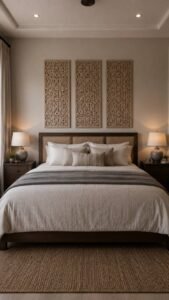
Geometric carving feels tailored, while flowing botanical shapes create softness. Paint the panels to match the wall for subtle relief or use natural wood for stronger contrast.
Repeat the Screen Material Elsewhere
Connect the screen to the rest of the bedroom through one repeated material. Cane can reappear on a bench, dark wood on picture frames, or painted color on a bedside table.

Keep the repetition limited to one or two pieces. This makes the feature feel intentional without creating a matching furniture set.
Picture Ledges That Let the Wall Change With Your Mood
A picture ledge offers flexibility for anyone who enjoys refreshing the bedroom without making new holes each time. One long shelf can hold layered frames, small canvases, books, and meaningful objects while keeping the arrangement contained.

Position it high enough that the tallest item cannot touch anyone sitting in bed. Choose a secure ledge with a raised front edge.
Run One Ledge Beyond the Bed Width
Extending the ledge past both sides of the mattress visually connects the bed and nightstands. The long horizontal line can also make the room feel wider.

Start with three or four larger pieces rather than many tiny frames. Add smaller objects only after the main artwork feels balanced.
Mix Frame Sizes Without Losing Order
Choose frames in varied heights, then connect them through one repeated element such as dark wood, warm brass, cream mats, or black edges. Overlap a few pieces lightly so the display feels relaxed.

Keep the tallest frame away from nearby fixtures and place visual weight near the center.
Add Personal Objects Between the Artwork
A small ceramic piece, travel keepsake, carved object, or favorite book can make the ledge feel personal rather than staged. Use objects that stand securely and avoid crowding.

Repeating one color from the artwork helps three dimensional pieces belong. Rotate a few items while keeping the main frames in place.
Ceramic Wall Collections That Feel Like Bedroom Jewelry
Ceramic wall pieces introduce handmade texture without the visual weight of a large framed print. Shallow bowls, abstract forms, sculpted flowers, and glazed tiles can create a collection that changes with the light.
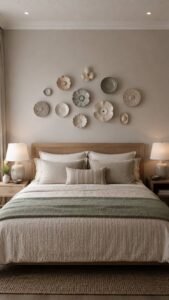
Use secure hanging systems and avoid placing heavy objects directly above pillows. A limited palette will keep the arrangement calm enough for a bedroom.
Arrange Shallow Forms in a Loose Cluster
Start with one larger ceramic piece, then build outward with smaller shapes. Leave uneven gaps so the display feels collected rather than perfectly measured.

Cream, sand, moss, and soft blue create a quiet palette, while black and rust add stronger contrast. Test the arrangement on the floor before mounting anything.
Mix Matte and Glossy Surfaces
Combining matte clay with glazed ceramic creates depth even when every piece shares one color family. Glossy surfaces catch daylight, while matte forms add softness and shadow.

Keep the shapes simple so the finish remains the main detail. This works beautifully on warm white, muted green, clay, or charcoal bedroom walls.
Create a Narrow Vertical Composition
A vertical line of ceramic forms can make a low ceiling appear taller and works well beside a bed or dresser. Begin with the largest piece near eye level, then place smaller forms above and below it.
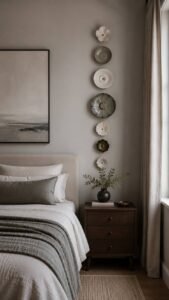
Keep enough spacing to reveal each silhouette. The arrangement should feel balanced without becoming perfectly symmetrical.
Gradient Painted Walls That Move From Calm to Dramatic
A gradient wall uses several related tones instead of one flat paint color. The transition can follow architectural lines, move from dark near the floor to light near the ceiling, or create broad horizontal zones behind the bed.

This treatment adds depth without objects that collect dust or reduce space. Choose colors with similar undertones so the result feels smooth and intentional.
Fade Deep Color Toward the Ceiling
Beginning with a richer shade near the lower wall can ground the bed, while lighter color above keeps the room open. Clay can move into peach, forest green into sage, or navy into misty blue.

Blend the transition softly or use clean divisions. Keep the ceiling in the palest tone for a lifted effect.
Follow Existing Architectural Lines
Use chair rails, picture rails, wall recesses, or the top of a headboard as natural points for changing color. This makes the gradient easier to execute and gives every shade a reason for its placement.
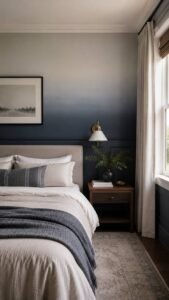
Paint trim in a connecting tone rather than bright white so the wall reads as one composition.
Carry One Tone Into Nearby Decor
Repeat the middle or lightest gradient shade through a lampshade, bench cushion, frame, or throw. This small connection helps the wall feel integrated with the room.

Avoid matching every accessory to each band of color. One or two thoughtful echoes are enough to create harmony.
Give Your Bedroom Walls a Story Worth Waking Up To
The most successful bedroom wall decor does more than fill empty space. It creates a focal point, supports the room’s mood, and reflects something about the person who sleeps there. A panoramic mural can offer escape, molding can introduce architectural order, and decorative screens can add height. Picture ledges make personal collections easy to update, ceramic pieces provide handcrafted texture, and gradient paint creates movement without clutter. Begin with the wall that first catches your eye when you enter, then choose one main idea instead of combining every option. You can continue the room through related inspiration for bedroom colors, bedding, lighting, small bedroom layouts, headboard styling, closet organization, and relaxing decor so the finished space feels connected from wall to wall.
