
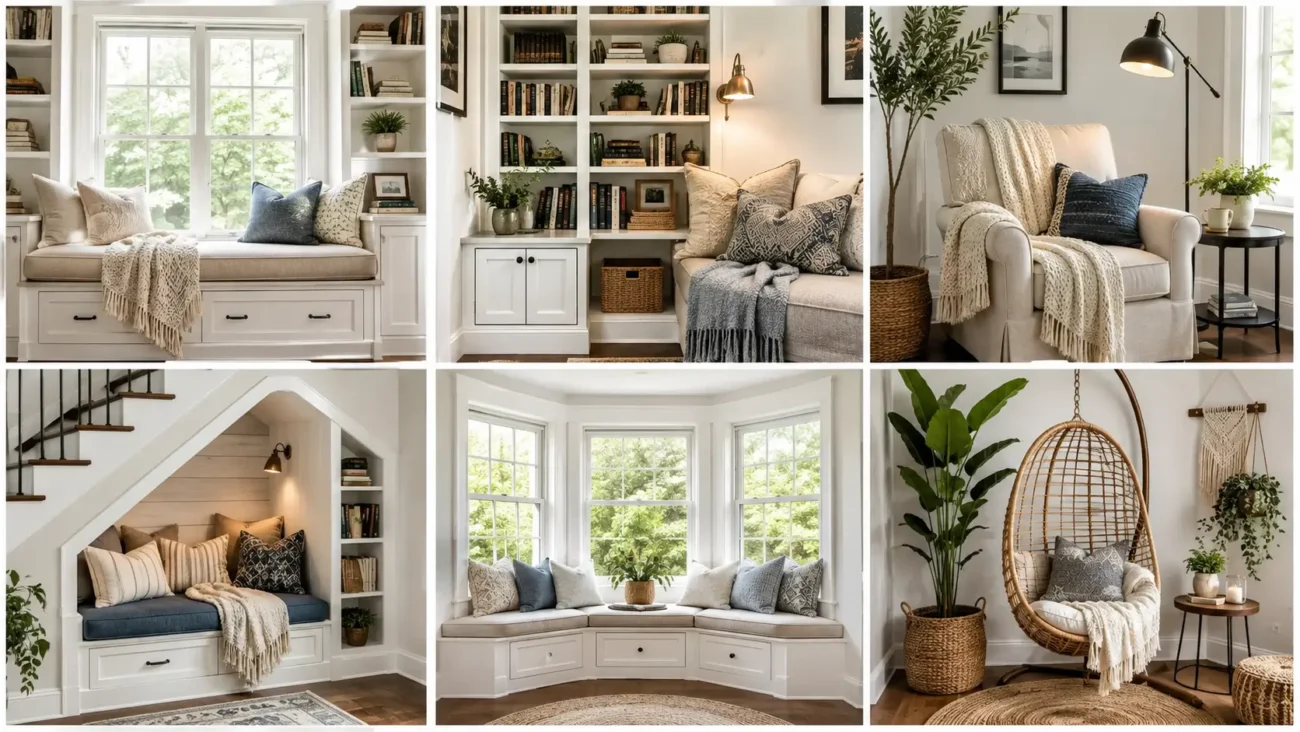
Reading nook ideas can create a meaningful place to slow down without requiring a separate library or major renovation. The most inviting nooks combine supportive seating, useful lighting, nearby book storage, and a visual boundary that makes the area feel intentional. A quiet corner can be formed inside a wide doorway, beside a cabinet, along a landing, or even with movable furniture that changes position throughout the day.
The seven concepts below avoid predictable window benches and ordinary chair arrangements. Each one uses architecture, fabric, storage, or flexible furniture to give reading a clear place within the home while keeping the surrounding room practical, comfortable, and visually connected.
Threshold Reading Nook Between Two Rooms
A wide opening between adjoining rooms can become more than a passage. By deepening one side of the doorway and adding a compact place to sit, the threshold gains a second purpose without interrupting circulation. Keep the materials connected to both rooms so the nook feels like a bridge rather than a separate feature.
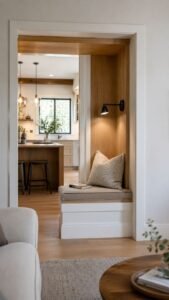
This design works especially well between a bedroom and dressing area, a living room and dining room, or a hallway and home office.
Jamb Pocket Book Ledges
Build slim book ledges into the deeper side of the doorway frame. The shelves should face inward so book spines remain visible from the seat but do not project into the walkway. Use the upper ledges for current reading and the lower one for a cup or reading glasses.
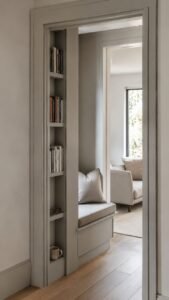
Painting the ledges and frame in one tone gives the small storage area a calm architectural appearance.
Half Turn Reading Perch
Place a compact upholstered perch against one side of the opening and angle it slightly toward the quieter room. A rounded back and firm seat create support without taking up the depth of a lounge chair.

Add a narrow foot cushion that can tuck underneath when not needed. The angled position allows the reader to feel sheltered while still maintaining a view into the adjoining space.
Transom Glow Above the Seat
Install a softly diffused light inside the upper part of the doorway frame. The glow should wash downward across the book and shoulder rather than shine directly into the eyes. A warm dimmable source can support evening reading while also turning the threshold into a gentle night light.
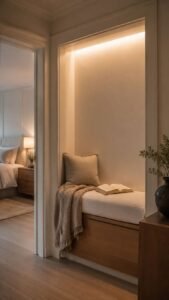
Keep the fixture concealed behind a shallow panel so the frame remains clean during the day.
Foldaway Cabinet Nook for Multipurpose Rooms
A foldaway cabinet nook provides a dedicated reading place in a room that cannot keep permanent seating on display. Closed doors hide the upholstery, books, and accessories when the area is needed for work, guests, or exercise.
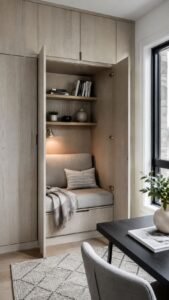
When opened, the cabinet becomes a compact reading station with its own back support and lighting. Choose cabinet fronts that match nearby storage so the feature blends naturally into the wider room.
Upholstered Reveal Panel
Line the inside of the cabinet doors with padded fabric panels that form a soft visual surround when opened. Use washed linen, small scale florals, or hand loomed stripes to introduce personality without overwhelming the room.
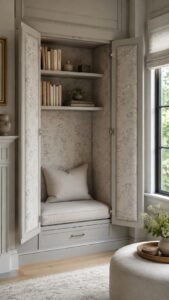
A plain seat cushion can balance a patterned interior. The fabric also softens the hard surfaces around the reader and makes the cabinet feel more comfortable than ordinary storage.
Pullout Foot Shelf
Fit a low pullout platform beneath the seat so the reader can raise their feet without adding a separate ottoman. Cover the top with the same fabric as the seat or use a durable woven mat. When closed, the platform disappears behind the cabinet base.
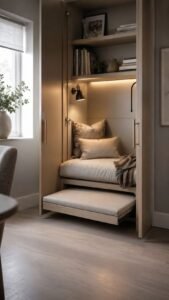
This detail helps the nook support longer reading sessions while keeping the floor clear when the room returns to another purpose.
Hidden Book and Charging Drawer
Add a shallow drawer beside or below the seat for a small book stack, bookmarks, charging cables, and reading glasses. Divide the interior so small items do not become tangled or difficult to find.
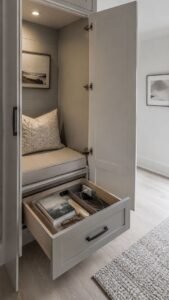
A discreet outlet at the back can support an electronic reader or phone. Keeping these essentials inside the cabinet allows the nook to open fully prepared instead of requiring accessories from several rooms.
Freestanding Book Island Nook With Open Circulation
A freestanding book island can create a reading destination in the center of a large room without building walls. The structure combines a curved seat, low shelves, and a focused light within one compact footprint.
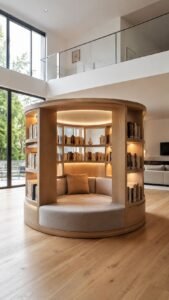
Because it can be approached from several directions, it feels inviting rather than enclosed. This concept suits open living areas, large bedrooms, lofts, and family rooms where wall space is already occupied.
Crescent Seat Around the Core
Wrap a crescent shaped upholstered seat around one side of the island. The curve supports a relaxed posture and allows a reader to shift positions without leaving the nook. Choose a firm seat with a deeper cushion at the center.

A contrasting welt or narrow fabric border can define the outline while giving the freestanding structure a tailored finish from every angle.
Radial Lower Book Compartments
Arrange low book compartments around the base so they follow the circular or oval form. Each section can hold a different category, such as fiction, magazines, art books, or family favorites. Keep the compartments below seat height to preserve open sightlines across the room.

Repeating the same wood or paint finish on every side helps the island appear like furniture rather than a group of separate shelves.
Pivoting Reading Light Mast
Place a slim vertical light at the center of the island with an arm that can rotate toward the seat. The fixture should cast a focused beam without lighting the entire room.
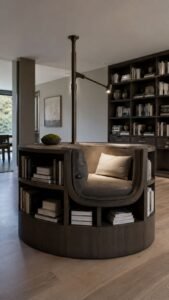
A sculptural stem in aged brass, dark bronze, or painted metal can give the island a strong identity even when nobody is using it. Position the switch within easy reach from the cushion.
Curtain Crown Nook With Adjustable Privacy
A ceiling mounted curtain can give an ordinary corner the feeling of a private room without permanent construction. Instead of hanging a straight panel behind a chair, use a curved track that creates a soft crown around the reading area.
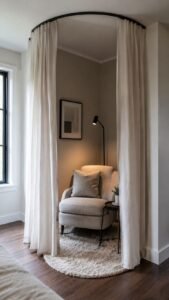
The curtain can remain open during the day and close when greater quiet is needed. This idea works well in bedrooms, shared living rooms, and studio apartments.
Half Moon Ceiling Track
Install a half moon track above the reading area and extend it far enough to surround the seat without touching it. Choose a track finish close to the ceiling color so the hardware remains discreet.

A wider curve gives the fabric a graceful drape and prevents the closed nook from feeling cramped. The open side should face the best natural or architectural view in the room.
Weighted Textile Base
Sew a slim weight into the lower edge of the curtain so the fabric hangs smoothly and does not move with every draft. Washed velvet, lined linen, or a dense printed cotton can create different levels of privacy.
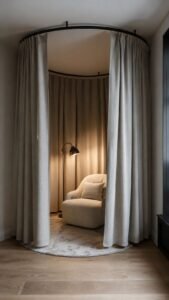
Keep the hem slightly above the floor for easy cleaning. A substantial textile also helps the nook feel calmer by reducing visual movement around the reader.
Tieback Storage Pockets
Create broad tiebacks with built in pockets for a paperback, reading glasses, or a phone. When the curtain is open, the pockets remain easy to reach beside the seat. When closed, they hold small essentials without requiring a side table.
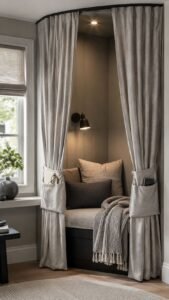
Use the same fabric as the curtain for a quiet look, or choose a contrasting trim that connects with the cushion and rug.
Gallery Rail Reading Nook With Changing Displays
A gallery rail nook combines reading with a rotating display of book covers, small art, and personal notes. The rail becomes an active part of the routine rather than fixed decoration. Place it beside a comfortable seat at a height that is easy to reach.

This concept is useful for readers who enjoy changing their surroundings, saving favorite passages, or keeping several books visible without filling the wall with deep shelving.
Rotating Cover Ledges
Install two or three very shallow ledges along the rail for displaying books face forward. Change the selection according to season, color, subject, or current interest. Keep enough space between covers so each one remains readable.

The arrangement can bring color into a neutral corner and encourage unfinished books to return to attention instead of disappearing inside a larger collection.
Sliding Lamp Carriage
Attach a small adjustable lamp to a horizontal rail so it can slide between the seat and display area. The reader can move the light according to posture, book size, or time of day. Select a compact shade that directs light downward and limits glare.
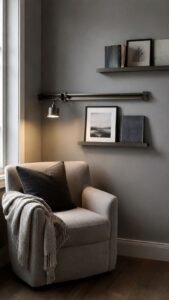
A matching metal finish on the rail, lamp, and ledges gives the flexible system a unified appearance.
Bookmark and Note Strip
Add a narrow fabric or cork strip beneath the ledges for bookmarks, reading lists, postcards, and handwritten quotations. Keep the display edited so it feels personal rather than cluttered. Small clips allow pieces to change without damaging the wall.
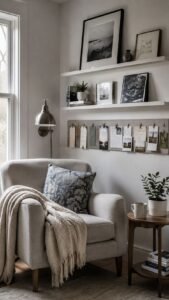
This simple layer makes the nook feel connected to the reader’s habits and gives meaningful paper items a visible place.
Shared Back to Back Reading Nook
A shared reading nook can support two people without requiring conversation or a large sofa. Place individual seats back to back with a slim storage core between them, allowing each reader to face a different view.
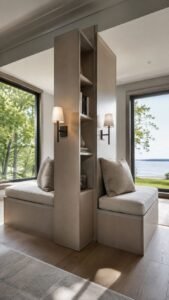
The arrangement creates privacy while preserving companionship. It works well for couples, siblings, or parents and children who enjoy reading together but prefer different lighting, posture, or book choices.
Central Book Tower
Build a narrow central tower that rises slightly above the seat backs and includes shelves opening in both directions. Each reader gains a personal section for books and small accessories. Keep the upper portion partly open so light can move through the structure.
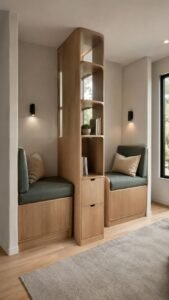
Rounded corners make the tower feel softer and reduce the risk of bumping into sharp edges when sitting down.
Opposing Seat Personalities
Use two seats with the same overall size but different upholstery or cushion firmness. One side might have a supportive upright back, while the other offers a deeper relaxed angle. Coordinated colors keep the pair visually connected without making them identical.
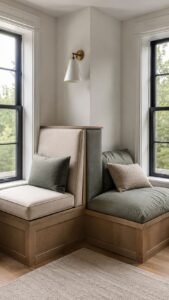
This approach recognizes that readers have different comfort preferences and gives the shared nook a collected, personal character.
Separate Light Controls
Mount one focused light on each side of the central tower and provide independent dimmer controls. Each reader can choose the brightness they need without affecting the other side.
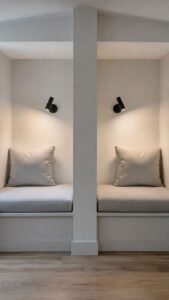
Direct the light inward so it stays within the reading area and does not create glare across the room. Matching fixture shapes preserve symmetry even when the light levels differ.
Mobile Reading Cart Nook That Moves With the Light
A mobile reading nook is useful when no single corner works throughout the day. A compact cart can carry books, a lamp, a drink surface, and soft accessories to different rooms or positions. Pair it with a lightweight chair or floor cushion that is easy to relocate.

The system creates a reading habit without permanently dedicating valuable space, making it practical for apartments and flexible family homes.
Rolling Book Cart With Quiet Wheels
Choose a narrow cart with smooth wheels and divided shelves for current books, magazines, and reading supplies. Low side rails keep items secure while the cart moves. Use quiet rubber wheels that travel easily across hard floors and rugs.
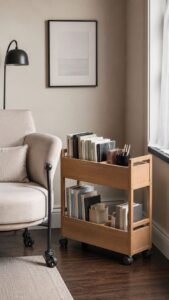
A warm wood or painted finish can make the cart feel like attractive furniture rather than office equipment.
Rechargeable Shade Lamp
Place a rechargeable lamp on the upper shelf so the nook can move without searching for a nearby outlet. A small fabric or frosted glass shade will provide softer light than an exposed bulb.
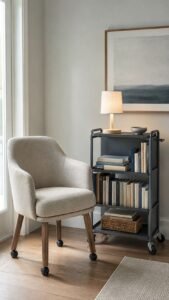
Select a stable base that will not tip when the cart rolls. The lamp can also serve as a gentle room light when the reading setup is not in use.
Nesting Footrest and Side Surface
Add a compact footrest that slides beneath a small portable side surface when stored. The two pieces can move with the chair and cart, then separate when the reader settles into place. Use a durable cushion on the footrest and a wipeable top on the table.
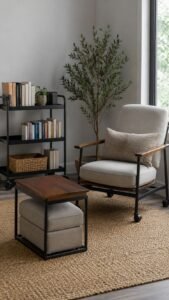
This gives the mobile nook full comfort without leaving several loose items scattered around the home.
Make Your Reading Corner Worth Returning To
The best reading nook ideas are not defined by size. They work because every part supports the act of reading, from the direction of the light to the place where a book rests between sessions. A threshold perch can activate a passage, while a foldaway cabinet preserves flexibility. Book islands create a destination, curtain crowns offer privacy, gallery rails keep inspiration visible, shared seats support quiet companionship, and mobile carts follow the best light. Choose the concept that matches your home and habits, then continue exploring related bookshelf styling, bedroom corner, living room, lighting, and small space decor ideas to shape a nook you will genuinely use.
