
Halloween decorations ideas can feel much more memorable when the house is treated as a collection of strange discoveries instead of being filled with the same seasonal objects in every room. Small details placed around entrances, passages, tables, doors, and overlooked corners can build the atmosphere gradually while still allowing the home to remain comfortable and functional. This approach also creates more visual variety because every area can contribute a different part of the story.
Deep brown, soot black, tobacco beige, muted wine, aged cream, pewter, and smoke gray work especially well when combined with subdued lighting and tactile finishes. The following ideas focus on unusual structures, believable styling, and details that reward a closer look.
Build a Sealed Correspondence Console Near the Entrance
Turn an entry console into a mysterious collection of unopened correspondence rather than covering it with familiar Halloween ornaments. Stack cream envelopes, folded papers, old style document boxes, dark wooden trays, and a single narrow desk lamp so the surface resembles a place where unanswered messages have accumulated.
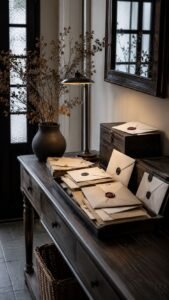
Use wax colored seals without making every envelope identical, and leave enough open tabletop visible to avoid clutter. The effect should feel like a believable working surface that has quietly become strange, making it especially effective near a front door where guests notice the details immediately.
Arrange Envelopes by Size and Age
Group several envelopes in shallow piles, mixing fresh cream paper with deeper beige and smoke toned pieces. Keep some fully closed while allowing others to reveal a folded inner page without readable writing.
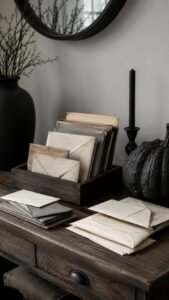
Different sizes create a collected appearance, while restrained quantities prevent the display from becoming craft heavy. A dark wooden letter tray gives the arrangement an intentional base and makes the entire console feel styled rather than scattered.
Add One Unclaimed Delivery Box
Place a small weathered looking box at one end of the console and tie it with plain dark cord. Avoid labels that explain exactly what is inside because uncertainty gives the piece more atmosphere.
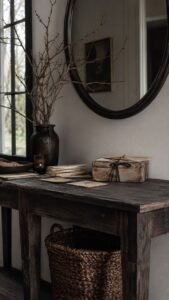
The box can sit partly beneath a stack of correspondence so it looks as though it has been waiting there for some time. This single solid object also balances the lighter paper details surrounding it.
Light the Papers From One Side
Use one low lamp positioned to the side rather than bright overhead lighting. The sideways illumination creates shadows beneath envelopes, trays, and folded edges, making simple materials feel more dimensional.
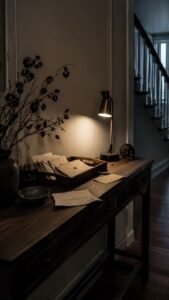
Keep the lamp shade neutral or smoke toned so it works with the room after the season ends. The controlled light makes the console interesting in the evening without turning the rest of the entry into a dark or impractical space.
Create a Bell Pull Passage Along a Narrow Hall
A narrow hallway can become one of the most memorable Halloween spaces by introducing a sequence of decorative bell pulls along one wall. Instead of real working bells, use long cords, substantial tassels, small metal plates, and understated numbered markers placed at different heights. The vertical forms make excellent use of a passage without taking up floor space.

Choose aged bronze, blackened metal, deep burgundy, and brown fibers to create a collected feeling. The arrangement becomes especially striking when the cords cast thin shadows across a softly painted wall.
Mix Long and Short Pull Cords
Avoid making every pull identical. Place one long cord almost to baseboard height, then alternate with shorter versions that stop around chair rail level. The changing lengths create rhythm and make the display feel discovered rather than installed as a matching set.
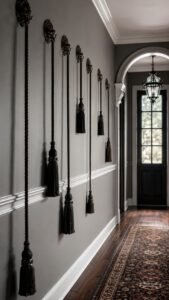
Use substantial cord rather than flimsy string so the pieces have enough visual weight to read clearly from the opposite end of the hallway.
Give Each Pull a Small Metal Plate
Mount a tiny bronze, pewter, or darkened brass plate above each cord. The plates can carry simple numbers, marks, or blank recessed spaces rather than obvious Halloween wording. Slight differences in shape make the wall feel collected over time.
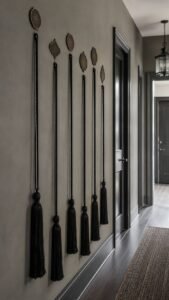
Keeping the plates small ensures the long vertical cords remain the dominant visual feature and helps the passage maintain a restrained, mature appearance.
Use Side Lighting to Stretch the Shadows
Position a low wall light or nearby table lamp so the bell pulls cast elongated shadows across the wall. The shadows add another layer without requiring additional decorations. As people move through the hallway, their angle of view changes and the cords seem more dimensional.
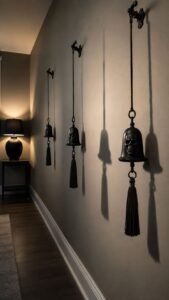
This is particularly effective on mushroom, taupe, olive gray, or warm stone walls where deep shadows remain visible without requiring a stark white background.
Style a Midnight Museum Label Shelf
Transform one shelving section into a mysterious display built around labels, mounts, and empty spaces instead of obvious spooky objects. Place small dark stands, narrow frames, stone like forms, sealed boxes, and aged paper labels with simple numbers beneath them. Some spaces should remain intentionally empty, as though an important object has been removed.
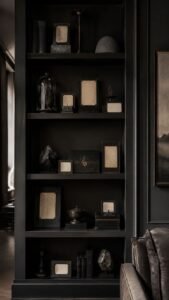
The combination of orderly presentation and unexplained absence creates an intriguing Halloween mood while still looking sophisticated enough for a living area, study, or entry passage.
Leave One Display Stand Completely Empty
An empty pedestal can create more curiosity than another decorative object. Position it near the center of the shelf and give it a small numbered card, suggesting that something once belonged there. Keep surrounding items low and restrained so the vacant spot is easy to notice.
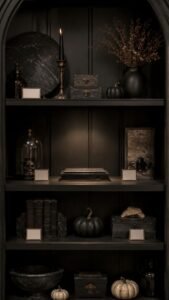
The unexplained gap encourages viewers to look closer and gives the shelf an unexpected narrative without relying on text, character figures, or familiar seasonal icons.
Pair Dark Objects With Pale Labels
Use charcoal, espresso, iron gray, and matte black objects against cream or parchment toned labels. The contrast helps each small display read clearly even from several feet away. Keep the labels consistent in size but vary their position slightly.
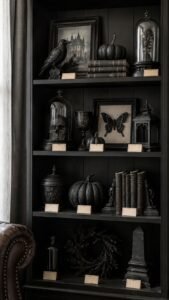
The visual order gives the shelf the feeling of a curated collection while the dark forms keep it appropriate for Halloween without making the display look like ordinary storage.
Introduce One Oversized Number Marker
Break the scale of the smaller labels with one larger number mounted behind a single object. Choose a restrained serif style or simple painted form and keep the color muted. The large marker acts as a focal point and prevents the shelf from becoming a row of equally sized details.
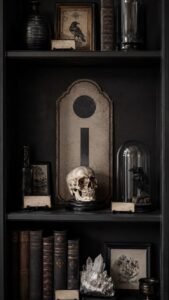
It also introduces graphic interest without depending on slogans or novelty signs.
Turn Interior Doorways Into Shadow Census Frames
Interior doors offer useful decorating space because they connect rooms and naturally attract attention as people move through the house. Create a shadow census effect by placing narrow dark portrait shapes, numbered plaques, and small framed silhouettes around the upper sides of several doorways.
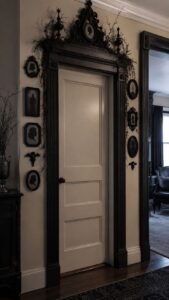
Do not cover the doors themselves. Instead, treat the surrounding trim as a register of mysterious former occupants. Repeating the general structure while changing each set of details creates continuity through the house without copying one display exactly.
Place Small Profiles Above the Corners
Use a few compact side profile silhouettes positioned just above the door trim rather than filling the wall with portraits. Keep each profile different in posture, hairstyle, or scale so the display looks assembled over time.
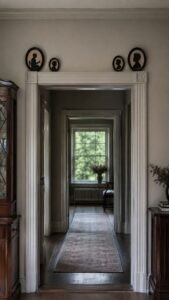
Mount them in simple dark frames or directly against a warm neutral wall. The high placement creates the feeling that the figures have always been part of the architecture.
Add Narrow Number Plates to the Trim
Attach removable numbered plates to one side of the door frame at changing heights. Use muted bronze, deep gray, or aged cream depending on the wall color. Avoid consecutive numbers because an irregular sequence feels more mysterious.
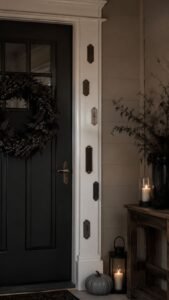
The plates add a subtle institutional quality without interfering with the function of the doorway, and they remain visible even when the door itself is open.
Repeat One Detail Across Several Rooms
Choose one small feature, such as an oval frame shape or a particular metal finish, and repeat it around three or four different doorways. Change everything else. This provides visual connection while preventing the house from looking as though the same decoration has simply been copied from room to room.
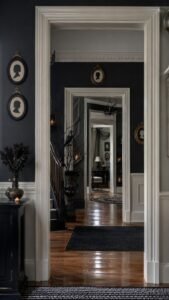
Guests notice the repetition gradually, which makes the overall styling feel more intentional and immersive.
Design a Hollow Frame Stack With Interior Light
Empty frames can become much more interesting when they are stacked with depth rather than hung flat as ordinary wall decor. Lean several substantial frames one behind another on a console, floor ledge, or wide shelf, then introduce a small concealed light between the layers.
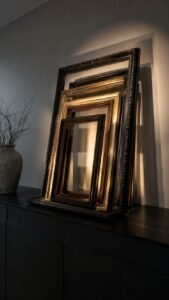
Choose frames with different depths and finishes but keep the palette limited to black brown, dull gold, and dark wood. The light passing through the empty openings produces changing rectangles and shadows, creating a sculptural Halloween feature without requiring a picture inside every frame.
Layer Three Different Frame Depths
Start with the deepest frame at the back and place shallower ones forward, slightly offset rather than perfectly centered. The changing openings create visible layers even before lighting is added. Avoid using too many sizes because three strong forms usually provide enough depth.
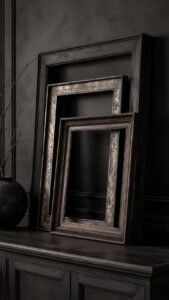
Dark wood and aged metallic finishes work together particularly well and can remain in the room beyond Halloween if the arrangement is later restyled.
Hide a Small Light Behind the Middle Frame
Place a low output light behind one of the central frames so illumination escapes around its edges. The source should remain concealed from normal viewing angles. This creates an unexpected glow within the hollow arrangement and throws angular shadows onto the wall.
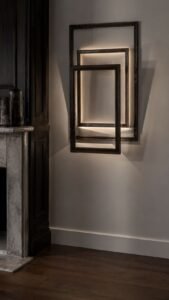
A soft neutral light looks more atmospheric than intense colored illumination and keeps the display compatible with a mature interior.
Let One Frame Rest on the Floor
If the display is beside a console or cabinet, allow the largest frame to sit directly on the floor and lean slightly backward. This change in height makes the composition feel more substantial and avoids creating another small tabletop cluster.
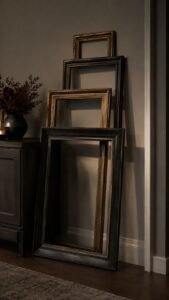
Make sure the piece is stable and away from heavy traffic. The lower placement also extends the visual story from furniture level toward the floor.
Lay a Removable Maze Runner Through a Passage
Instead of decorating only vertical surfaces, introduce a temporary maze inspired floor runner through a hallway, entry, or open passage. Use a dark washable runner with cream, rust, charcoal, or muted red lines arranged in broad angular routes rather than tiny complicated patterns.
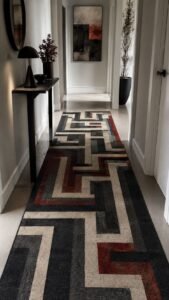
The design creates movement through the space and becomes part of how guests physically experience the room. Keep furniture and surrounding decorations restrained so the floor remains the main statement and the pattern never competes with excessive seasonal clutter.
Choose Broad Paths Instead of Tiny Lines
Large directional pathways are much easier to read across a floor than intricate miniature markings. Use a pattern with generous open areas between the routes so the runner still feels like a textile rather than a printed puzzle sheet.
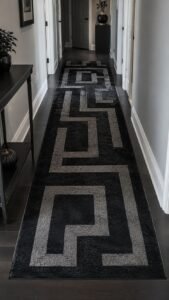
Broad shapes also photograph more clearly from doorway height and make the installation effective even in a narrow corridor where only part of the design can be seen at once.
Align the Pattern With the Hallway Direction
Position the strongest line so it draws the eye forward instead of cutting awkwardly across the space. Secondary turns can branch toward doors or furniture, creating the impression that the pattern reacts to the architecture.
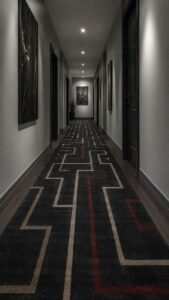
This small decision makes the runner feel designed specifically for the room. It also helps the narrow passage appear longer and gives visitors a natural direction of movement.
Echo One Runner Color Nearby
Repeat only one of the runner colors in a nearby lamp shade, framed object, bowl, or small textile. Do not reproduce the maze pattern elsewhere. A single repeated tone is enough to connect the floor to the surrounding decor while keeping the runner unique.
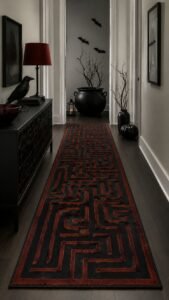
Deep rust, smoke blue, dark olive, or burgundy can work particularly well with Halloween styling that avoids predictable orange and black combinations.
Make Halloween Decorations Feel Discovered Rather Than Added
The most memorable Halloween decorations ideas do not need to cover every surface. A mysterious correspondence console, vertical bell pull passage, carefully labeled shelf, unusual doorway census, glowing hollow frame stack, and maze inspired runner each create atmosphere through placement and detail rather than repetition. Choose two or three ideas for a smaller home or connect several throughout a larger space to build a gradual sense of discovery. For more seasonal inspiration, explore Halloween room decor, Halloween wall decorations, Halloween kitchen decor, and Halloween party decor to continue the theme while giving every area its own identity.
