
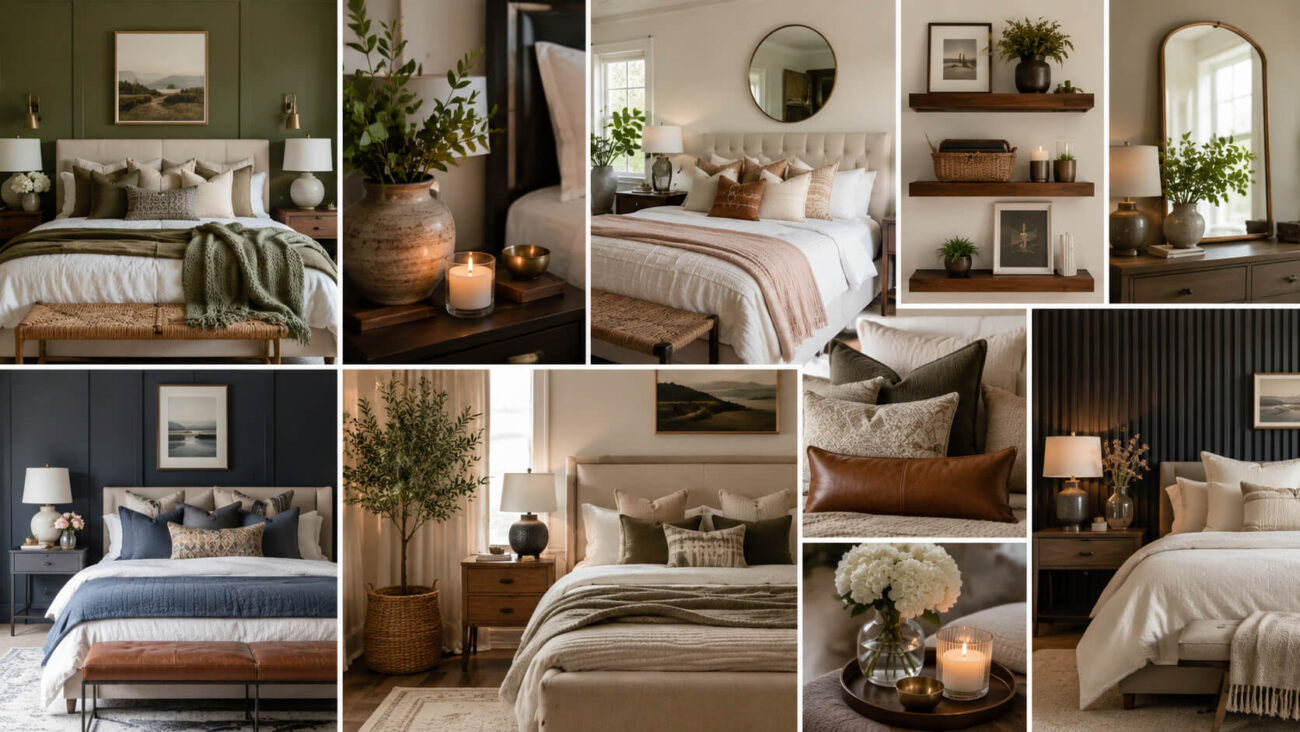
Bedroom decor feels most successful when it creates comfort while showing something meaningful about the person who uses the room. Instead of filling every surface with accessories, focus on color, fabric, craftsmanship, and objects that give the space a clear identity. A bedroom can feel romantic through draped cloth, grounded through natural materials, expressive through painted ceilings, or collected through vintage furniture and handmade details.
The goal is not to follow one strict style. It is to build a restful atmosphere where the bed, walls, windows, ceiling, and smaller corners all support the same mood. These bedroom decor ideas explore fresh ways to add character without repeating familiar formulas, helping you create a room that feels layered, useful, visually interesting, and deeply comfortable.
Enveloping Fabric Bedroom Decor for a Softer Atmosphere
Fabric can reshape a bedroom without changing its architecture. Draped materials soften straight walls, absorb visual noise, and make the sleeping area feel protected.
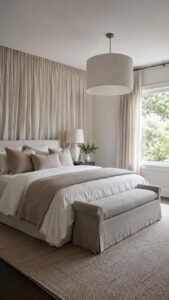
Choose cloth with enough weight to hang gracefully, then repeat a related texture through cushions, shades, or a small upholstered piece so the room feels connected.
Frame the Bed with a Ceiling Mounted Canopy
Install a simple ceiling rail above the bed and hang light cotton, washed linen, or softly patterned cloth around the sleeping area. The fabric can remain open during the day and close slightly at night for a more private feeling.
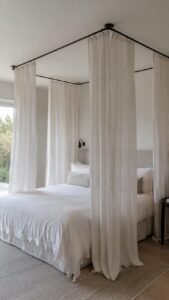
Choose a breathable material and allow the folds to fall naturally rather than arranging them too perfectly.
Cover One Wall with Tailored Drapery
A full wall of fabric behind or beside the bed can soften awkward windows and create a calm visual background.

Use neatly pleated panels that finish just above the floor, then keep nearby furniture simple so the cloth becomes the main feature. Warm white, dusty blue, tobacco, olive, and muted rose all create different moods.
Add a Decorative Bed Valance
A tailored bed valance can introduce pattern and hide the lower frame without making the bed feel overly formal. Choose a small botanical print, a narrow stripe, or a solid fabric with contrasting piping.

Coordinating the valance with one cushion or window shade gives the room a custom appearance while keeping the pattern controlled.
Vintage Bedroom Decor with Collected Character
Vintage pieces bring irregularity, patina, and a sense of history that new matching furniture cannot always provide. The most appealing rooms usually combine only a few older items with simpler contemporary pieces.
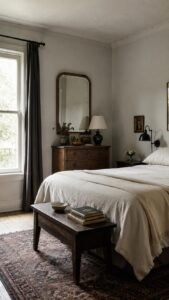
This balance keeps the bedroom practical while allowing each worn surface or unusual shape to feel special.
Use Different Bedside Chests
Matching bedside tables are not required for a balanced room. Pair two pieces with similar heights but different shapes, such as a small chest on one side and a round table on the other.
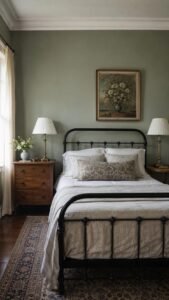
Connect them through matching lamps, related finishes, or the same wall color so the arrangement feels deliberate rather than accidental.
Turn an Old Trunk into a Blanket Station
Place a vintage trunk or sturdy wooden chest at the foot of the bed for storing spare blankets, seasonal covers, or decorative cushions. The worn surface adds warmth and gives the room a useful focal point.

Keep the top mostly clear, or add one folded textile and a small tray for a restrained finish.
Display Small Objects with Personal Meaning
A ceramic dish, inherited clock, framed letter, hand painted box, or travel keepsake can make a bedroom feel more personal than generic accessories.
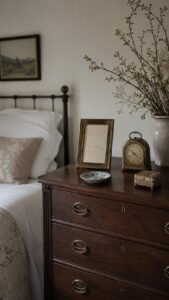
Group only two or three objects together and leave breathing room around them. Meaningful pieces become more visible when they are not surrounded by unrelated decoration.
Ceiling Focused Bedroom Decor for an Unexpected Finish
The ceiling can influence the entire atmosphere of a bedroom, yet it is often left plain. Treating it as part of the design can make a modest room feel more complete and imaginative.

The effect can be subtle through color or more decorative through borders, medallions, and carefully chosen shapes.
Use a Softly Tinted Ceiling
Paint the ceiling in a quiet version of the wall color rather than using bright white automatically. A pale blue, warm blush, creamy beige, or light olive can soften the upper part of the room and make evening light feel gentler.
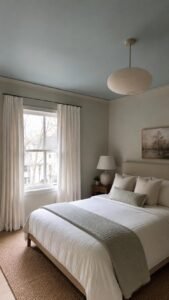
Keep the tone light enough to preserve an open feeling in smaller bedrooms.
Add a Painted Border Around the Ceiling
A narrow painted line or simple repeated motif around the ceiling edge can introduce detail without covering the whole surface. Choose a color already present in the room and keep the pattern restrained.
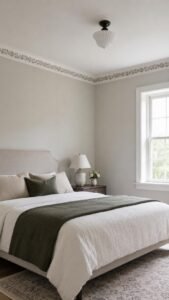
This idea works especially well in rooms with high ceilings, plain walls, or simple furniture that can support a decorative upper edge.
Highlight a Ceiling Medallion
A ceiling medallion can give a bedroom a graceful architectural feature even when the rest of the room is simple. Paint it the same color as the ceiling for quiet texture, or use a slightly deeper shade to reveal its shape.
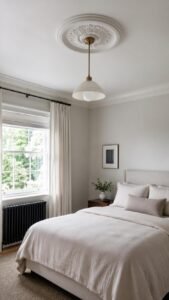
Pair it with a modest pendant that allows the decorative detail to remain visible.
Natural Material Bedroom Decor with Handmade Warmth
Natural materials help a bedroom feel grounded because their surfaces contain gentle variation. Limewash, woven fibers, raw wood, clay, stone, and handmade paper introduce texture without relying on loud pattern.

These materials work across modern, cottage, rustic, and relaxed interiors when their colors remain connected.
Soften the Walls with Limewash Texture
Limewash creates cloudy movement that can make flat walls feel deeper and more atmospheric. Choose warm chalk, mineral blue, dusty rose, or muted earth shades for a restful finish.
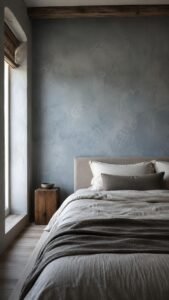
Keep artwork limited so the subtle wall variation remains visible, then add plain textiles that do not compete with the surface.
Introduce Woven Wall Panels
Grasscloth, woven paper, cane panels, or fabric wrapped boards can add warmth to one wall or a small section behind furniture. Their fine texture changes gently with daylight and makes the room feel crafted.

Use them away from damp areas and pair them with smooth painted surfaces for a balanced combination.
Style Clay Stone and Raw Wood Together
Combine a handmade clay lamp, a small stone tray, and a raw wood stool or cabinet to create a natural material story. The pieces do not need identical colors because their shared earthy quality connects them.
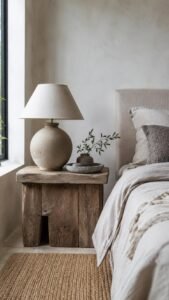
Limit the arrangement to a few strong objects so every texture remains easy to notice.
Bedroom Decor for Personal Morning and Evening Rituals
A bedroom becomes more useful when it supports small daily rituals beyond sleeping. A carefully arranged dressing spot, quiet drink station, or comfortable place to pause can make the room feel more personal.
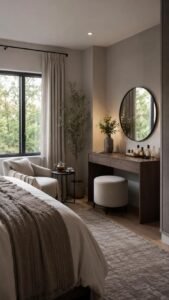
These areas should remain compact so they enrich the bedroom without turning it into a crowded multipurpose space.
Create a Focused Dressing Surface
Use a small table or narrow console for perfume, jewelry, a hand mirror, and one decorative container. Add a stool that fits underneath so the area stays tidy when not in use.
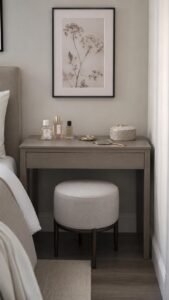
A wall mounted fabric panel or framed artwork can define the spot without relying on a large traditional dressing table.
Arrange a Bedside Water Station
Place a carafe, tumbler, and small tray on a stable bedside surface for a simple evening ritual. Choose glass, ceramic, or metal pieces that fit the room palette, then leave enough empty space for a book or phone.

This small arrangement adds comfort while making the bedside area feel intentionally styled.
Build a Quiet Window Perch
A compact chair, floor cushion, or low bench near a window can create a place for morning light, reading, or a few calm minutes before bed. Add one supportive cushion and a small surface for a cup.

Keep the area visually open so it feels like a retreat rather than extra furniture storage.
Crafted Pattern Bedroom Decor with an Individual Look
Pattern feels more personal when it appears through handcrafted textiles, painted details, and decorative trims rather than identical sets. The most successful mix combines different scales while repeating one or two colors.
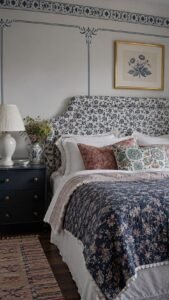
This creates interest around the room without allowing every surface to compete for attention.
Combine Botanical and Geometric Prints
Pair a flowing botanical design with a smaller check, diamond, or linear pattern in related colors. Use the botanical print on a cushion or curtain and the geometric design on a smaller accessory.
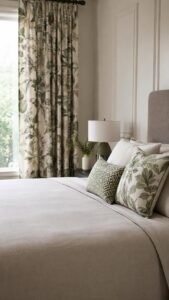
A plain bed cover between them gives the eye a quiet space and keeps the combination controlled.
Add Embroidered Borders and Piped Edges
Decorative borders can make simple textiles feel custom. Choose pillowcases with embroidery, a plain cushion with contrasting piping, or a curtain edge finished in a narrow patterned tape.
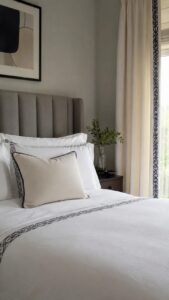
Repeating the same trim on two separate items creates connection without requiring a fully matched bedroom set.
Feature One Handmade Quilt
A handmade or patchwork quilt can give the bed color, craftsmanship, and a sense of story. Fold it across the lower part of the bed so it remains visible without covering every other textile.

Pull one shade from the quilt into a nearby object, then keep the remaining bedding quiet and uncomplicated.
Let Your Bedroom Tell a More Personal Story
Bedroom decor becomes memorable when it reflects daily habits, favorite materials, meaningful objects, and colors that genuinely feel comfortable. Begin with one idea that changes the atmosphere, such as a fabric canopy, tinted ceiling, vintage chest, limewash wall, or handmade quilt. Build around it slowly so every later choice supports the original mood rather than introducing another unrelated theme.
A personal bedroom does not need constant decoration or perfectly matched furniture. It needs useful surfaces, calm visual space, comfortable materials, and details that feel chosen with care. Explore related ideas such as cottage bedroom styling, vintage bedroom decor, canopy bed inspiration, natural wall finishes, guest bedroom ideas, handmade textile decor, and small bedroom retreats to continue shaping a home that feels warm, expressive, and completely your own.
